
Book Preview
Selected pages from this work. Preview images are watermarked and shown for browsing only.
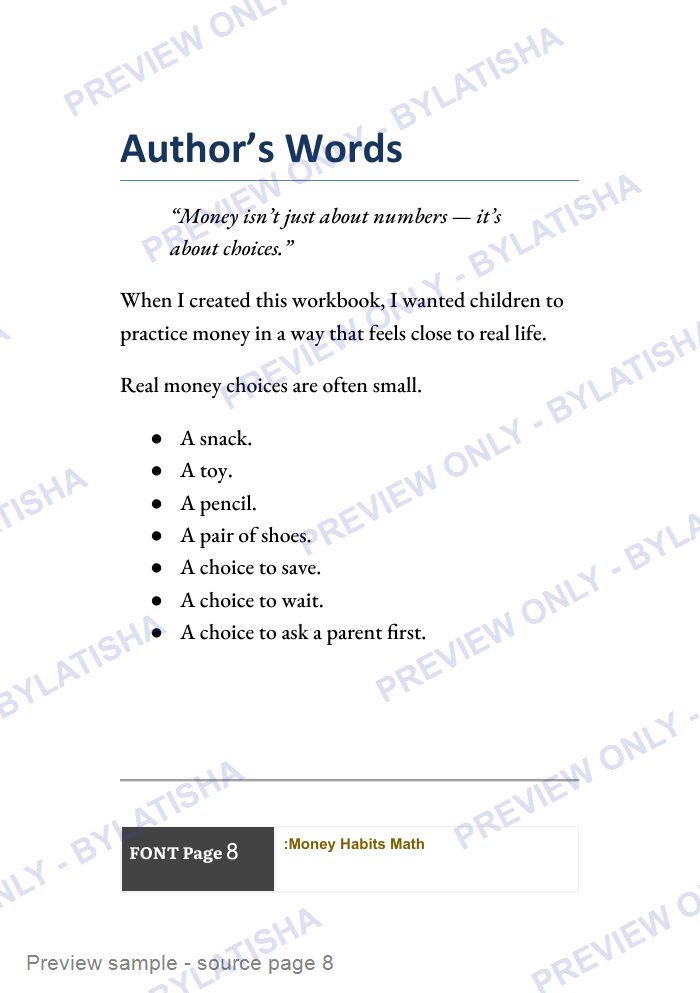
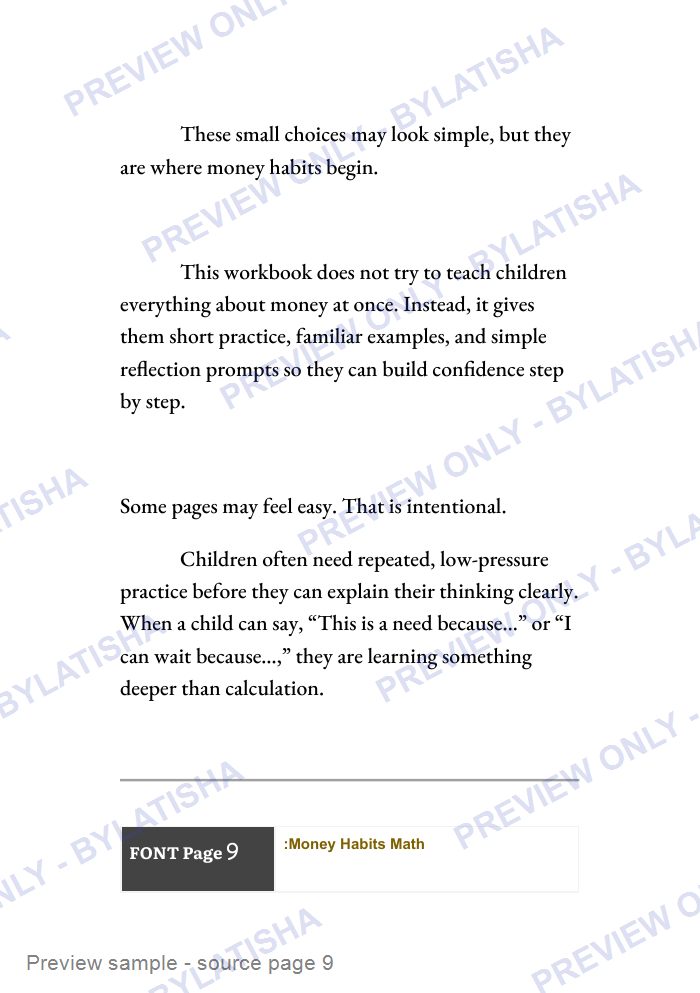
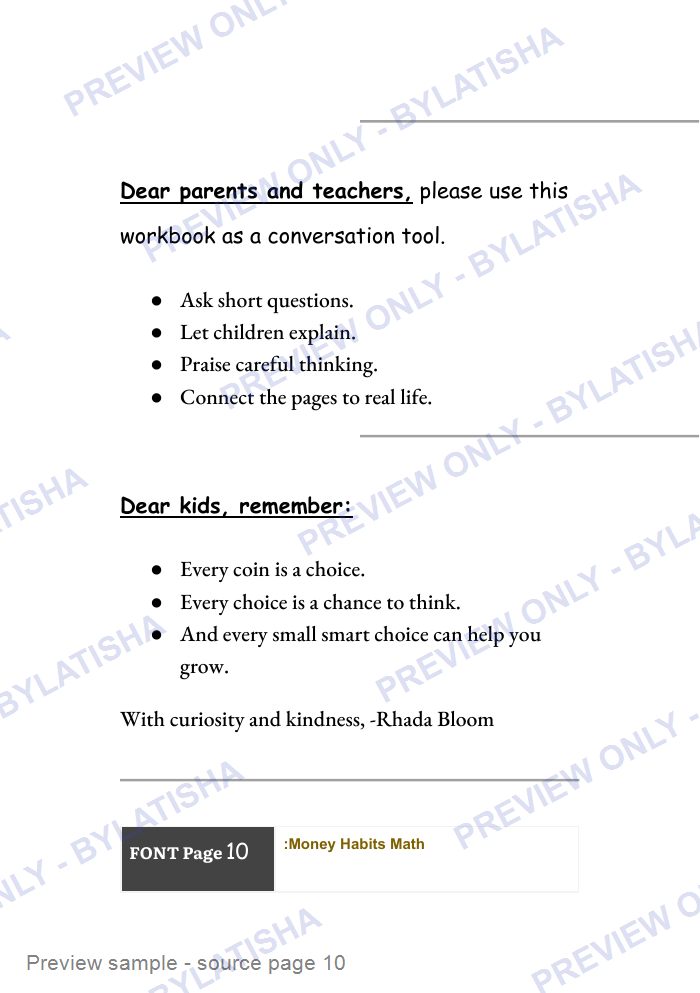
Many children can solve a math problem, but still need help connecting numbers with everyday money choices.
A child may know how to add or subtract, but still wonder: Is this a need or a want? Should I spend now or wait? What happens to my money after I save, spend, or give some away?
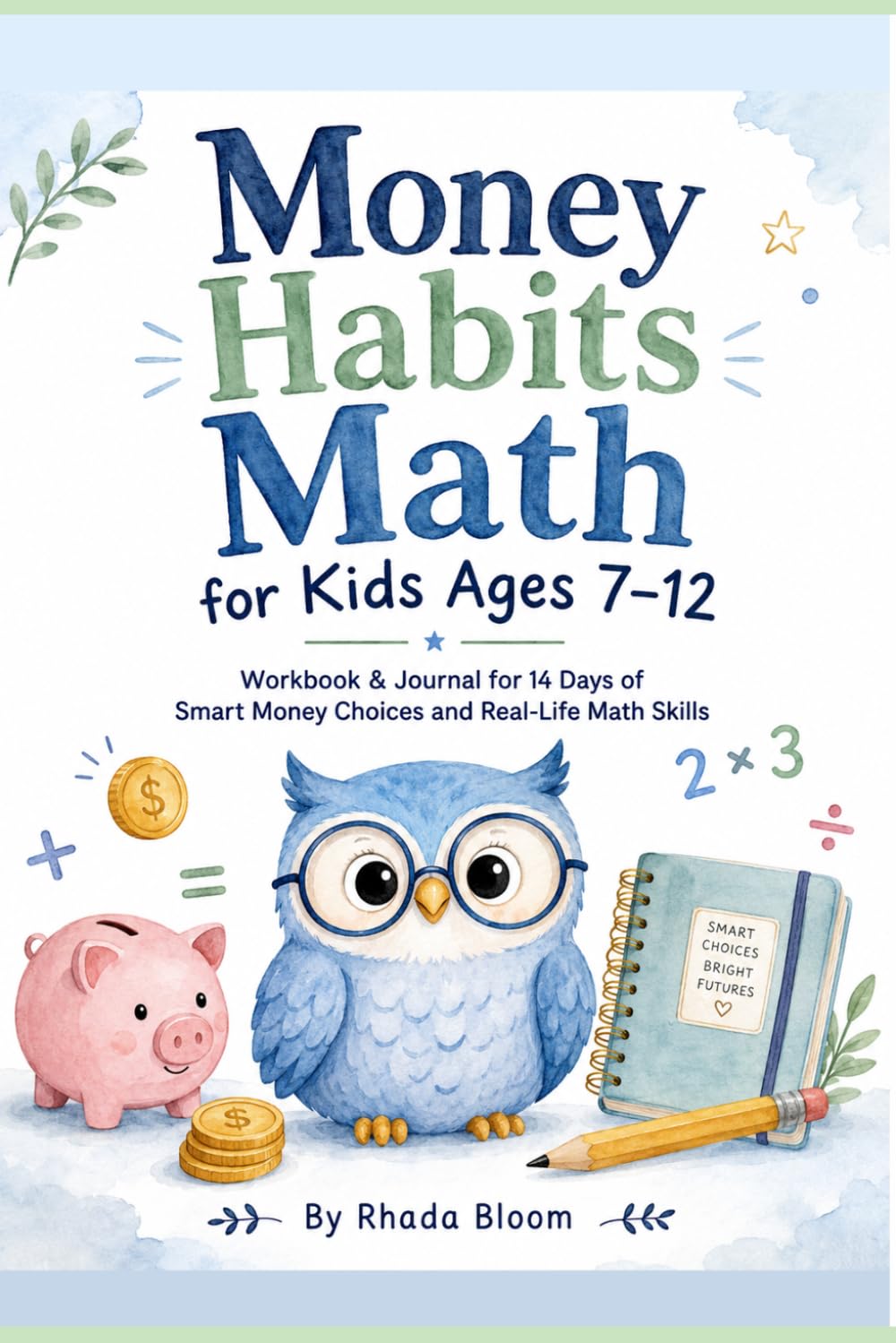
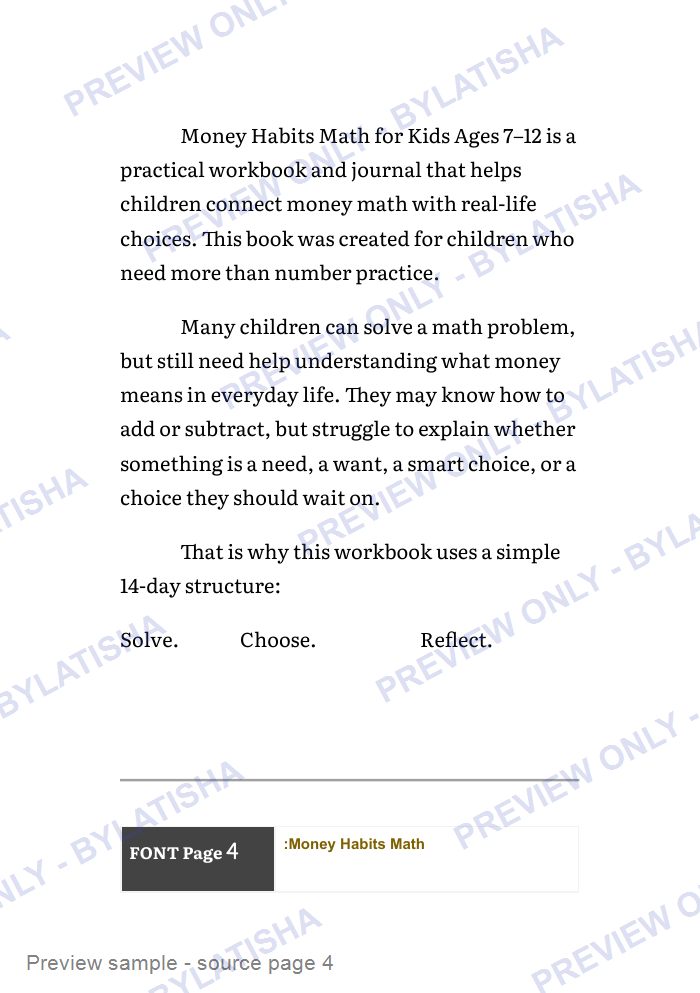
Money Habits Math for Kids Ages 7–12 was created for that gap.
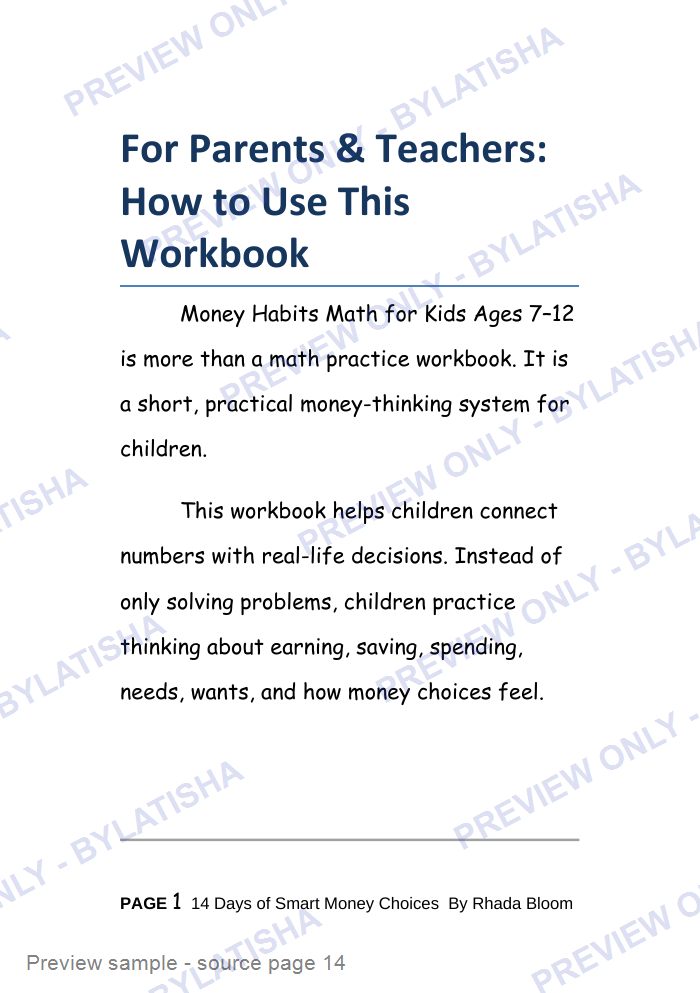
This workbook helps children practice simple money math while also thinking about small real-life choices: earning, saving, spending, needs, wants, waiting, and explaining why a choice makes sense.
Many money lessons for children focus on advice such as “save more” or “spend wisely.”
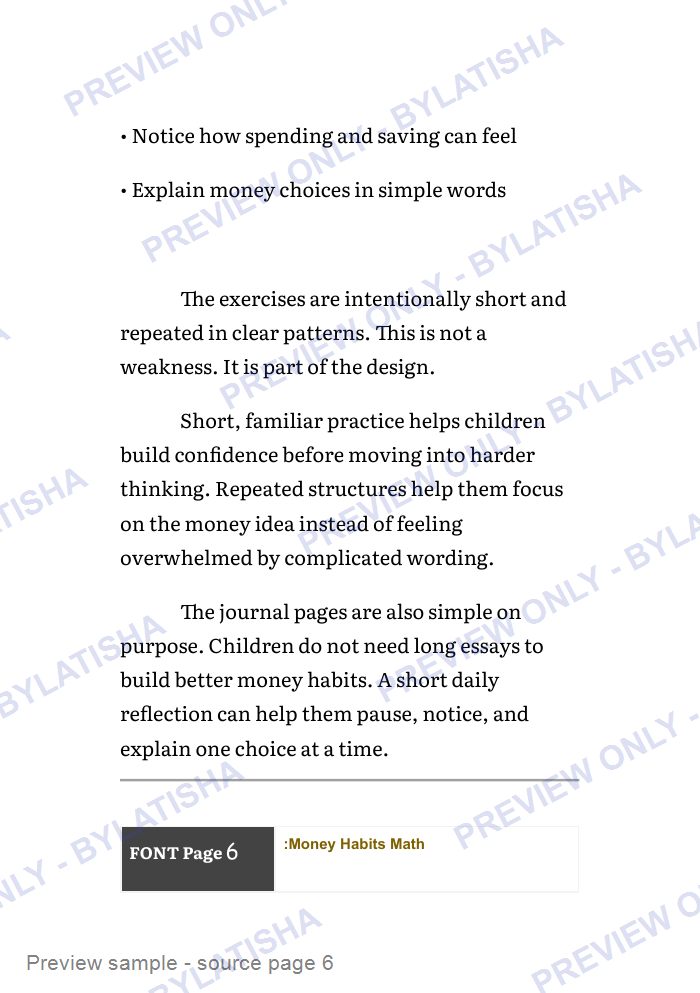
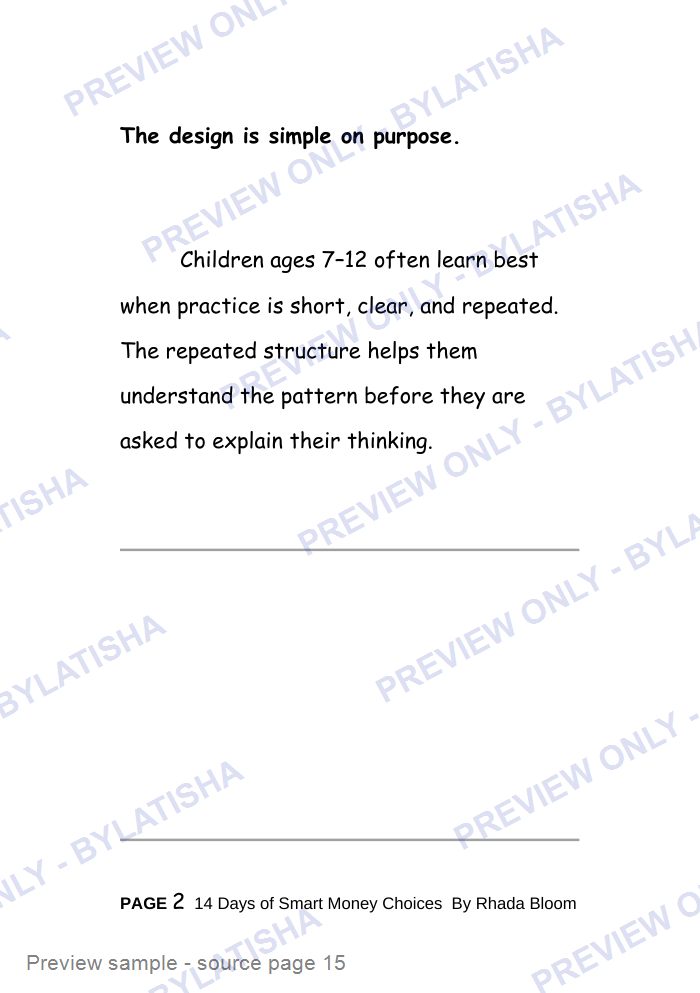
That advice can be useful, but children often need something more concrete: short practice, familiar situations, and a calm place to explain their thinking. This workbook uses repeated patterns on purpose, so children can focus on what is happening to the money instead of getting lost in complicated wording.
The book uses a simple 14-day structure:
Solve. Choose. Reflect.
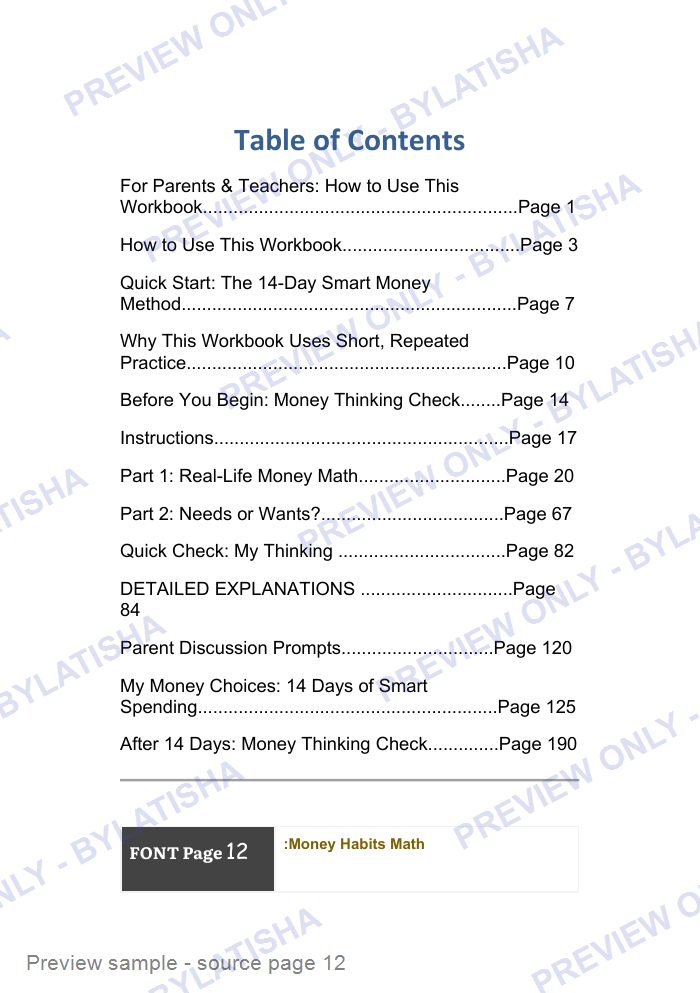
Children first complete short real-life money math questions. Then they think about needs and wants. Finally, they use journal pages to notice spending, saving, waiting, and feelings around choices.
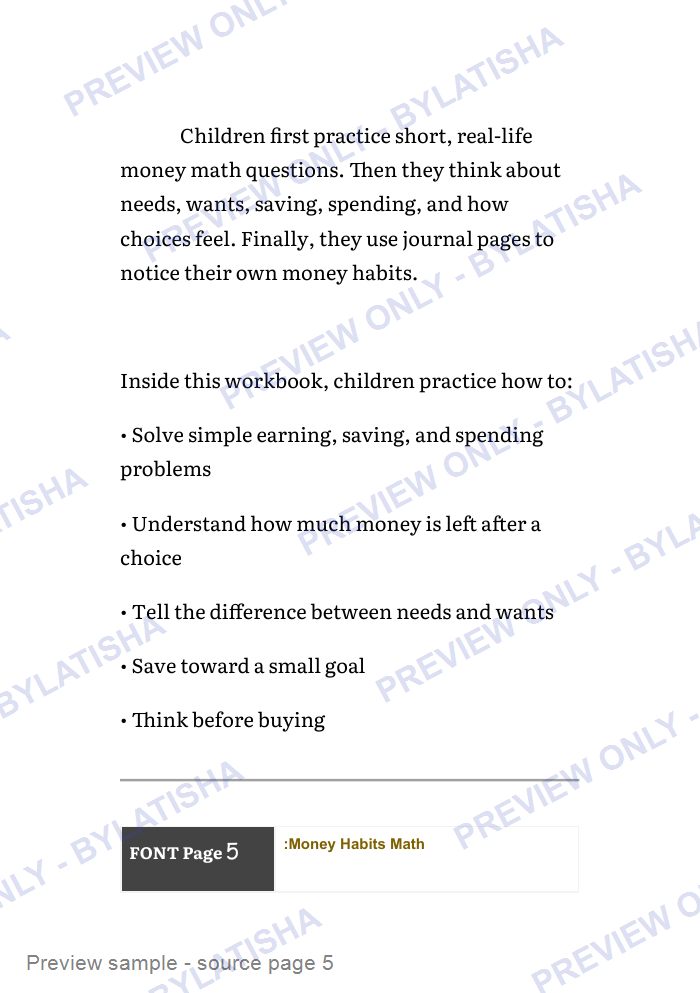
Inside, children work through:
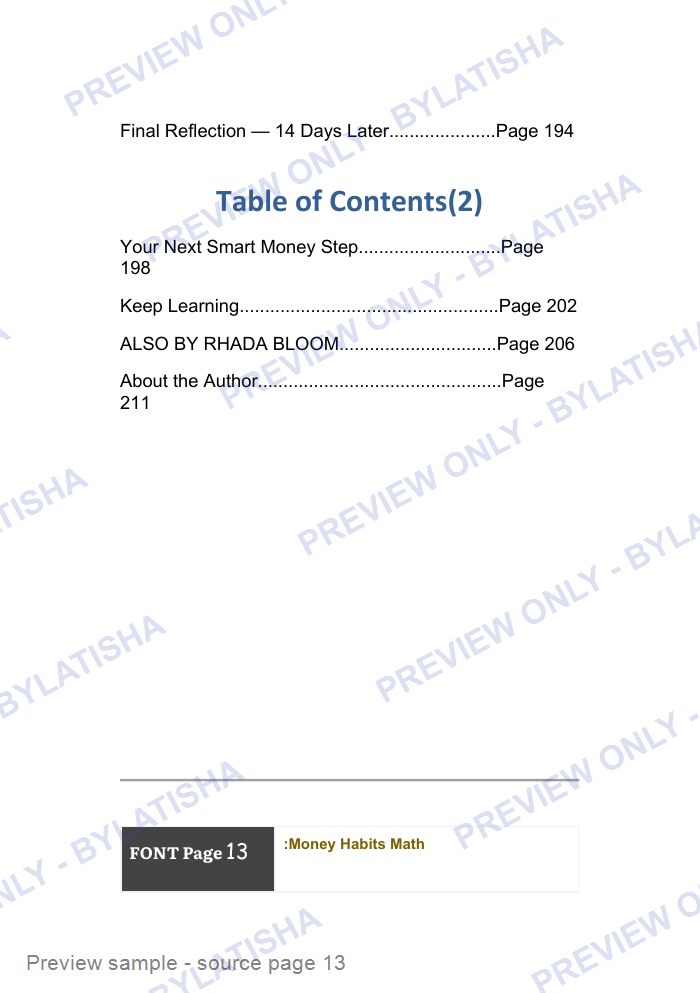
- Real-life money math questions about earning, saving, spending, and money left
- A needs vs. wants section with simple reasoning prompts
- Detailed explanations for checking answers
- Parent discussion prompts
- A 14-day money choices journal
- Before-and-after money thinking checks
- A final reflection and next-step page
This book is designed for:
- Children ages 7–12 who are ready for simple real-life money math
- Parents who want short, practical money conversations without long lectures
- Teachers or homeschool families looking for money-themed math and reflection pages
- Children who benefit from repeated, clear practice before explaining their thinking
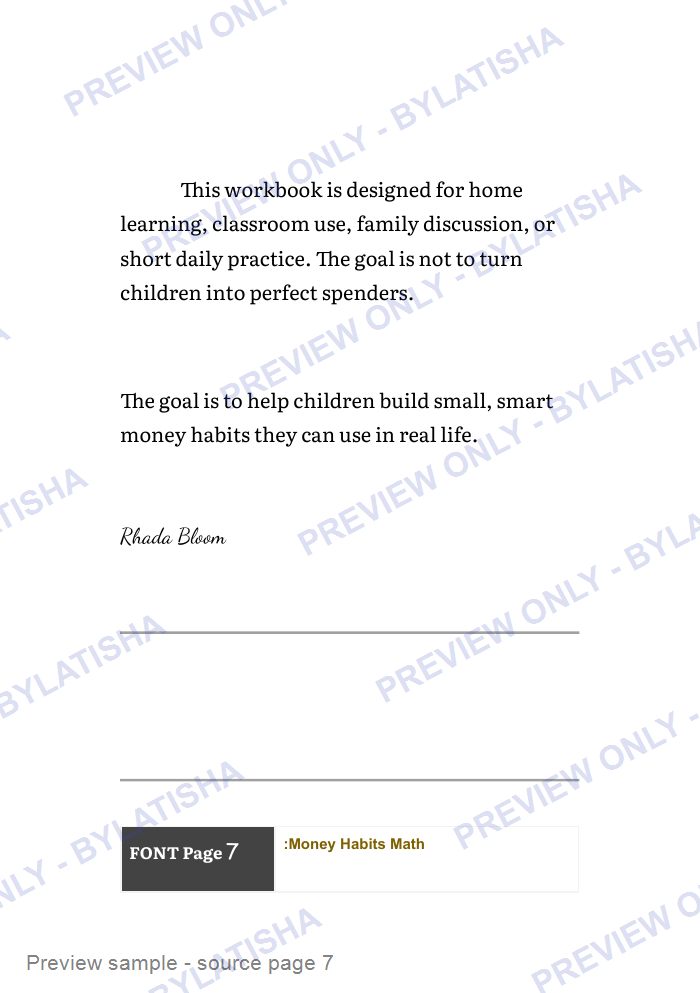
This book is not an advanced finance book. It does not teach investing, banking, or complex budgeting. It is also not a replacement for real family conversations about money rules. Instead, it gives children a calm, structured place to practice small money decisions one page at a time.
It can be used for 10–15 minutes a day, as a 14-day challenge or as flexible practice. If you want a grounded workbook that combines simple money math, needs-and-wants thinking, and short daily reflection, this book provides a clear place to begin.
rhadabloom.com
RELEASE CONTEXT
Release activity around this project
Project Details
View This Project
Available links for this project.