
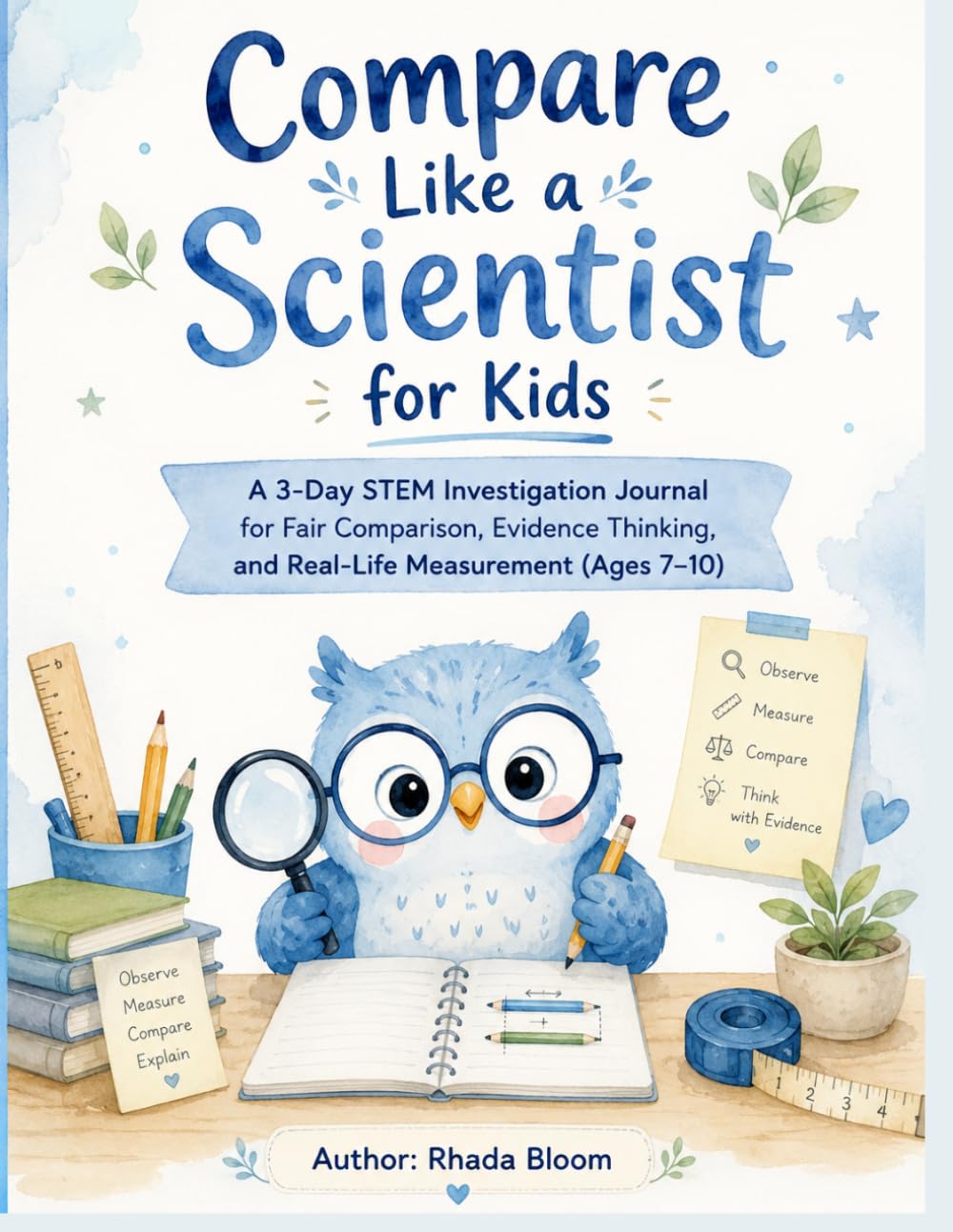
Book Preview
Selected pages from this work. Preview images are watermarked and shown for browsing only.
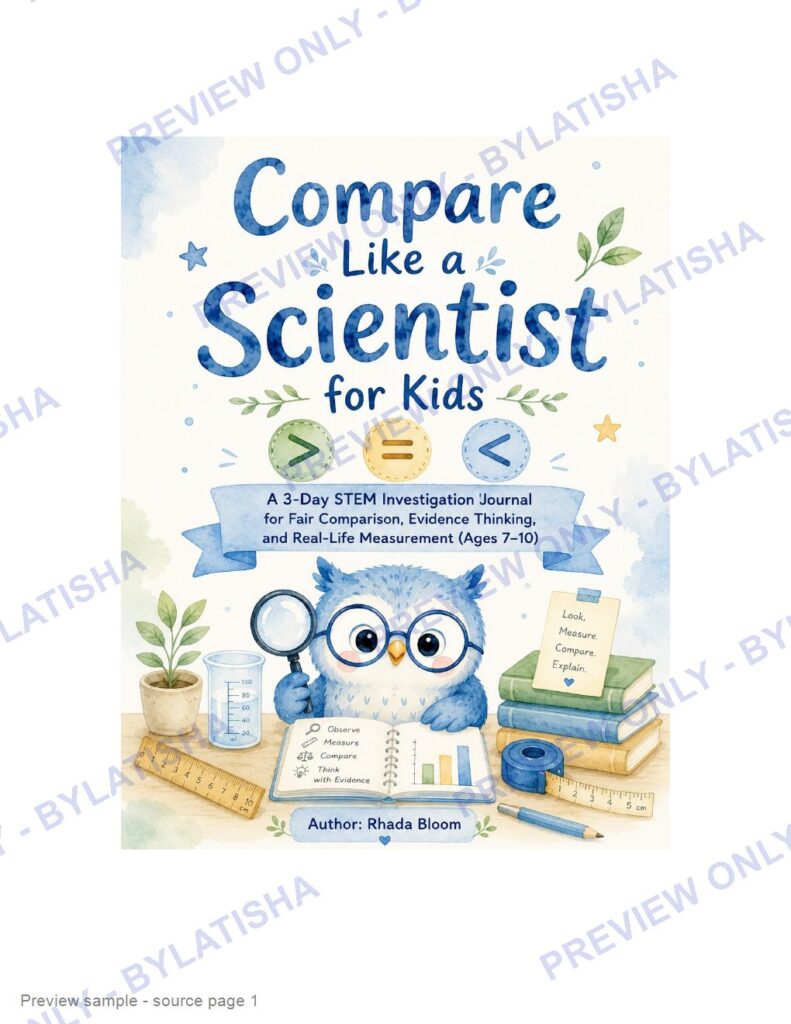
A 3-Day STEM Investigation Journal for Fair Comparison, Evidence Thinking, and Real-Life Measurement (Ages 7–10) … 1: Ages 6–10 Real-Life Measurement Series)
WHAT MAKES THIS INVESTIGATION JOURNAL DIFFERENT?
━━━━━━━━━━━━━━
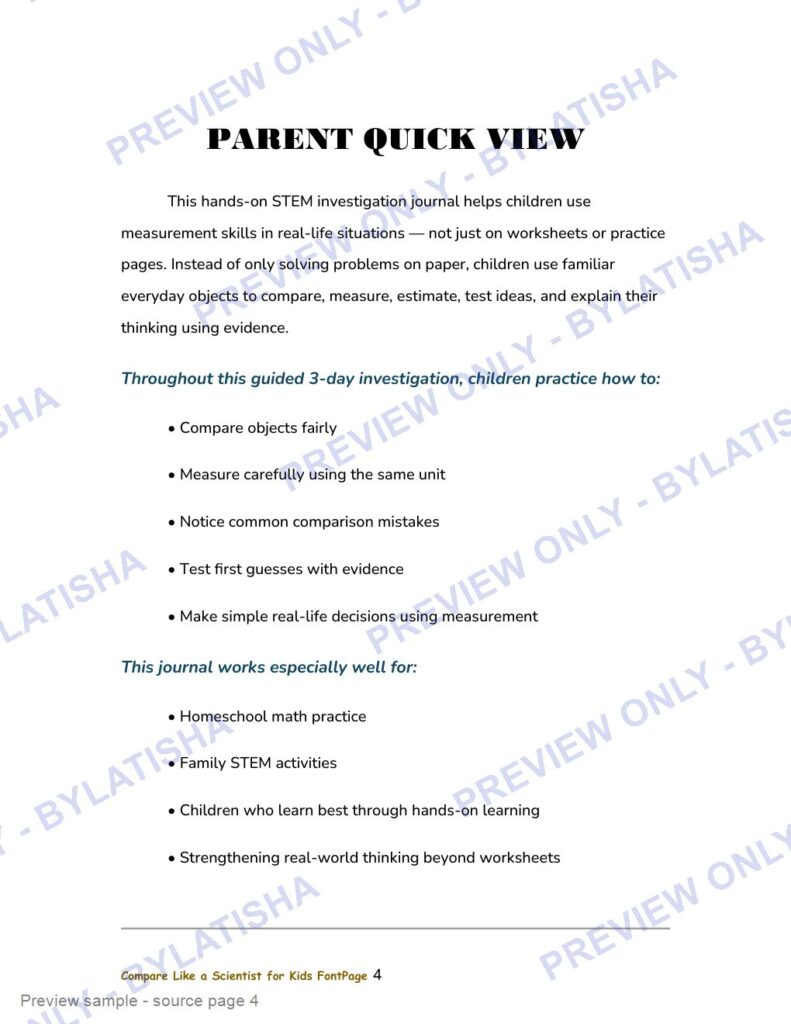
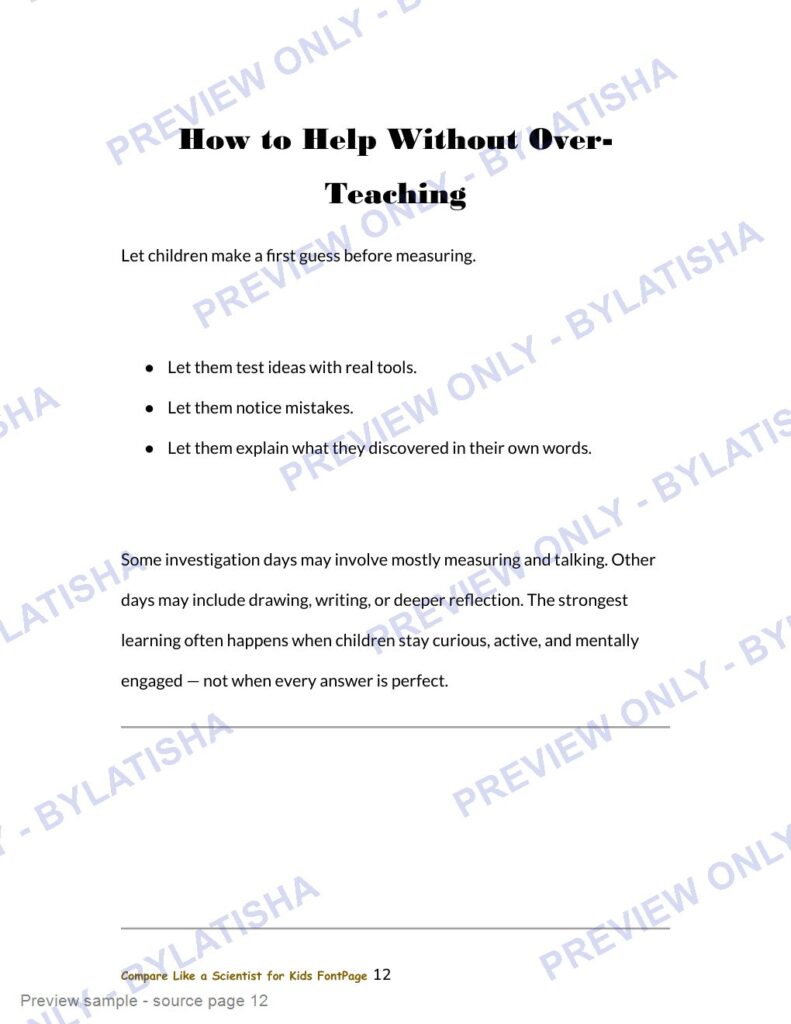
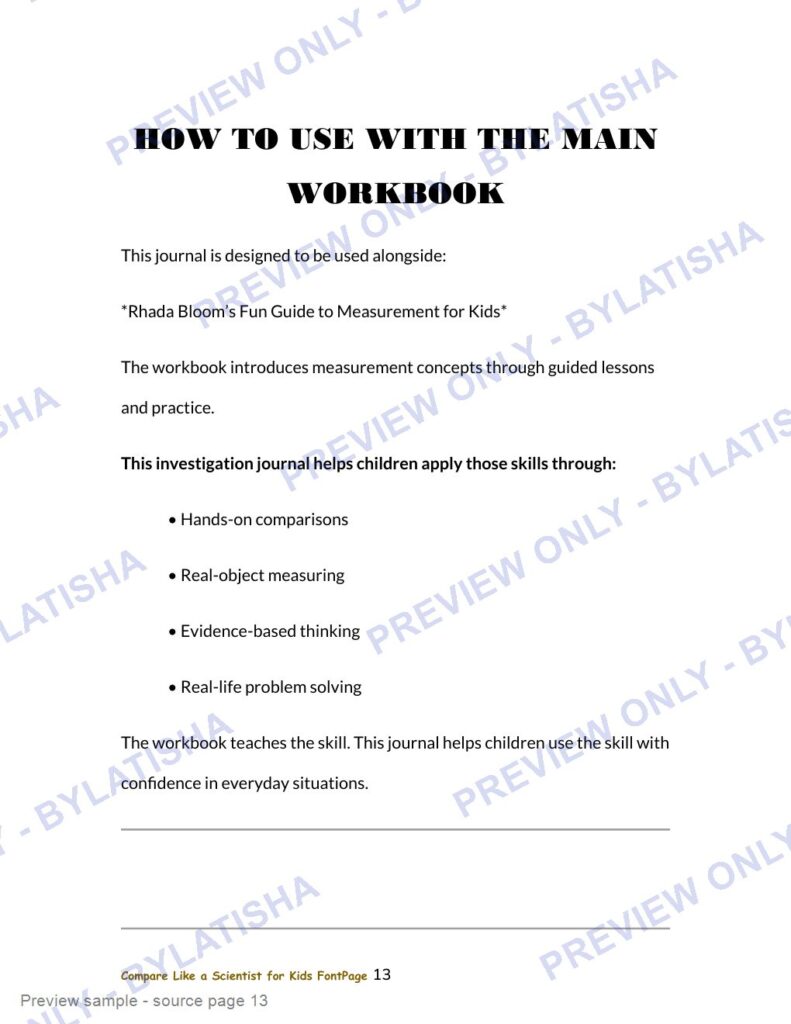
Unlike traditional measurement worksheets, this journal focuses on:
• Hands-on investigation
• Fair comparison
• Evidence-based reasoning
• Flexible thinking through measurement challenges
• Real-life measurement decisions
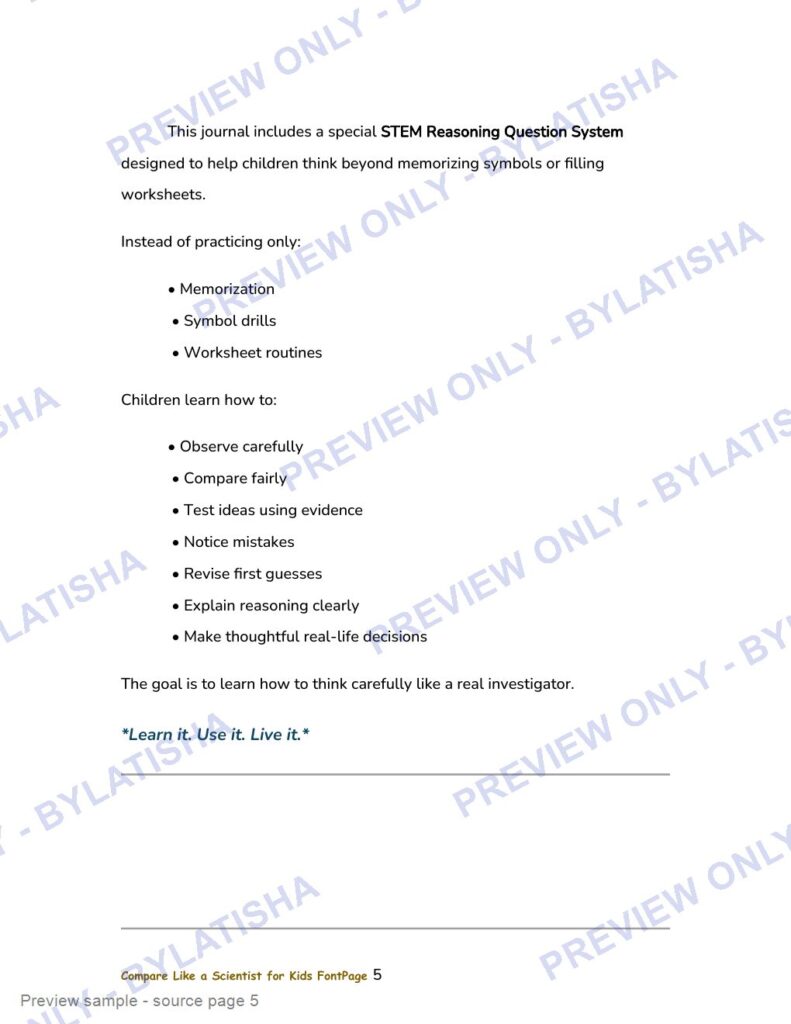
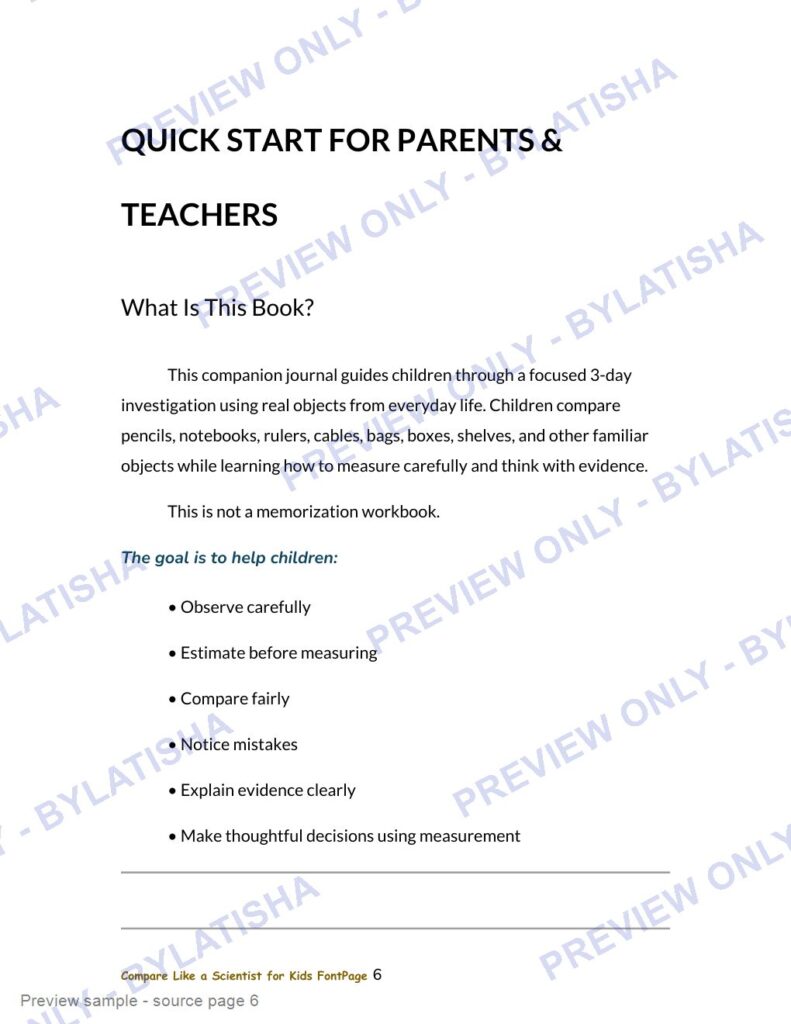
Children are encouraged to:
• Observe carefully
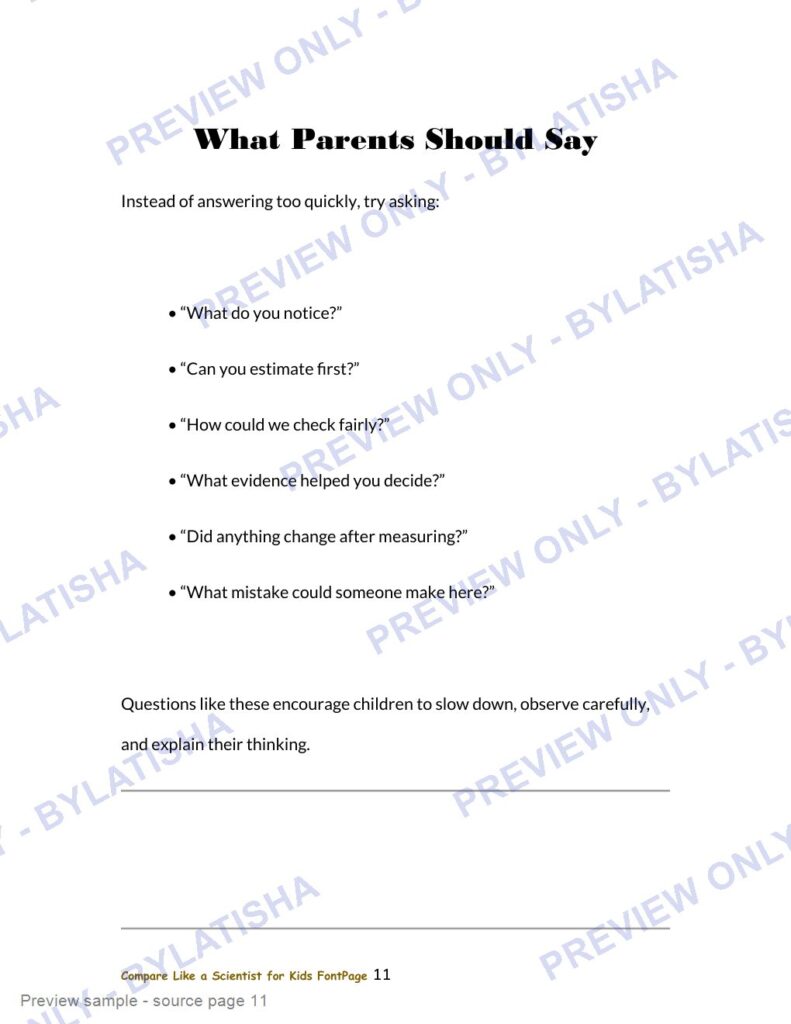
• Estimate before measuring
• Test ideas using evidence
• Revise first guesses
• Explain reasoning clearly
• Make thoughtful real-world decisions
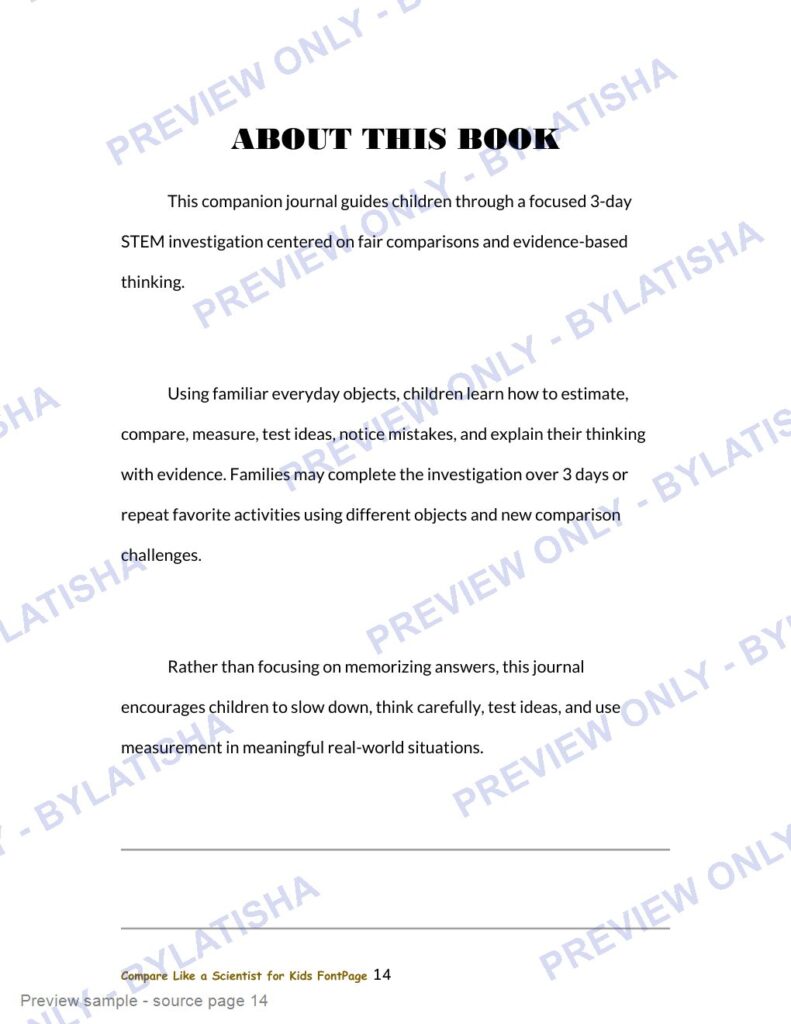
Rather than rushing to fill blanks, children practice how to slow down, investigate, compare fairly, and think more carefully.
━━━━━━━━━━━━━━
INSIDE THIS 3-DAY STEM INVESTIGATION JOURNAL
━━━━━━━━━━━━━━
Children practice how to:
• Compare objects fairly
• Measure using the same unit
• Notice common comparison mistakes
• Test first guesses with evidence
• Revise thinking when new evidence appears
• Explain reasoning clearly
• Use measurement to make thoughtful real-life decisions
The journal also includes a layered STEM Reasoning Question System designed to move beyond simple worksheet practice.
Question types include:
• Strongest evidence questions
• Error analysis
• Investigation sequencing
• Comparison fairness checks
• Real-life decision scenarios
• Flexible problem-solving tasks
These activities encourage children to practice reasoning, comparison, and evidence-thinking while using measurement in meaningful situations.
━━━━━━━━━━━━━━
DETAILED TEACHER & PARENT ANSWER GUIDE INCLUDED
━━━━━━━━━━━━━━
A complete Teacher & Parent Answer Guide is included to support deeper STEM discussion and evidence-based learning conversations.
The guide includes:
• Correct answers
• Detailed reasoning explanations
• Investigation-thinking support
• Flexible problem-solving notes
• Discussion guidance for parents, teachers, and homeschool educators
━━━━━━━━━━━━━━
WHO THIS BOOK IS FOR
━━━━━━━━━━━━━━
This journal works especially well for:
• Children ages 7–10
• Homeschool families
• Parents looking for real-world math practice
• STEM-style learning environments
• Children who learn best through hands-on exploration
• Learners who benefit from discussion and investigation-based activities
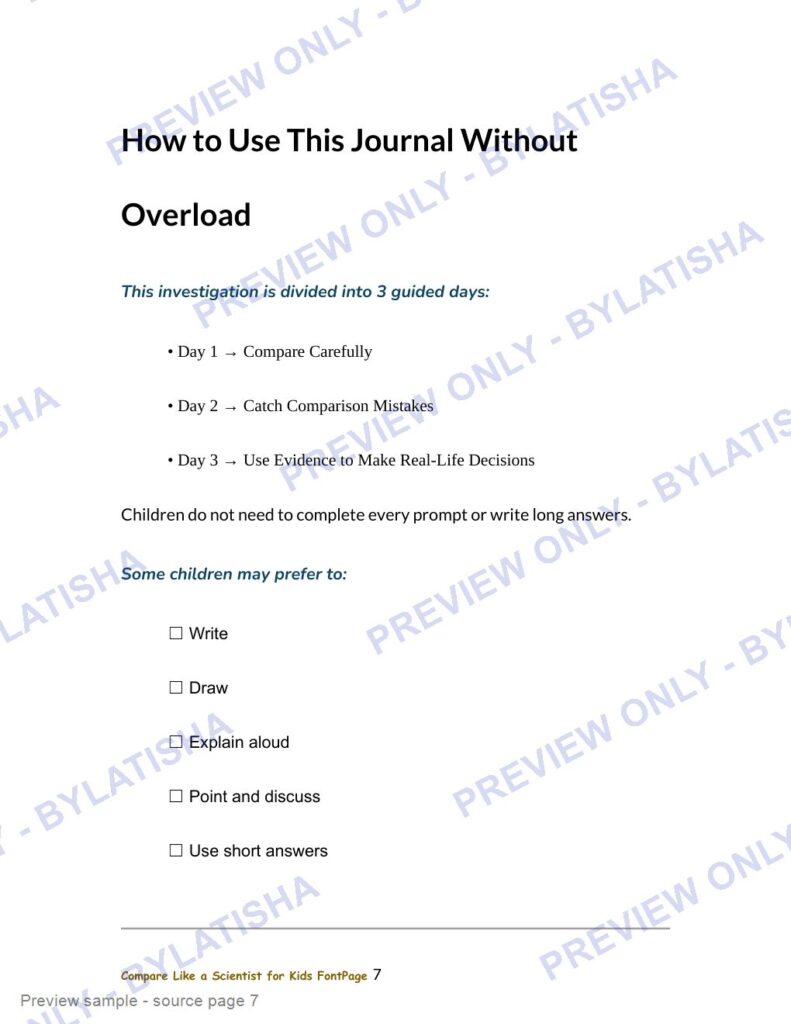
Children do not need to complete every prompt or write long answers to benefit from the investigation process.
The journal supports:
• Discussion
• Short responses
• Drawing
• Hands-on exploration
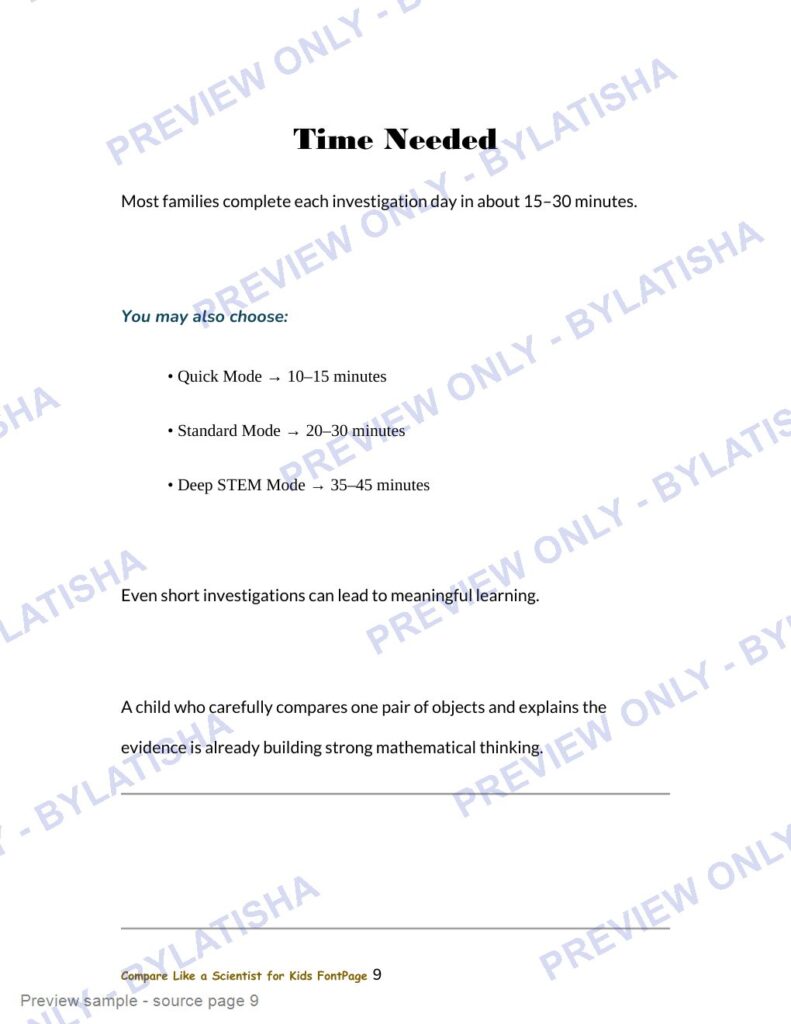
• Flexible pacing
• Different learning styles
This makes the investigation process more accessible for many learners, including children who may feel overwhelmed by traditional worksheet-heavy approaches.
━━━━━━━━━━━━━━
WHO THIS BOOK MAY NOT BE FOR
━━━━━━━━━━━━━━
This may not be the right fit for families looking for:
• Fast-paced drill worksheets
• Timed-test style practice
• Memorization-focused math routines
• Highly repetitive workbook pages
The goal of this journal is not perfection.
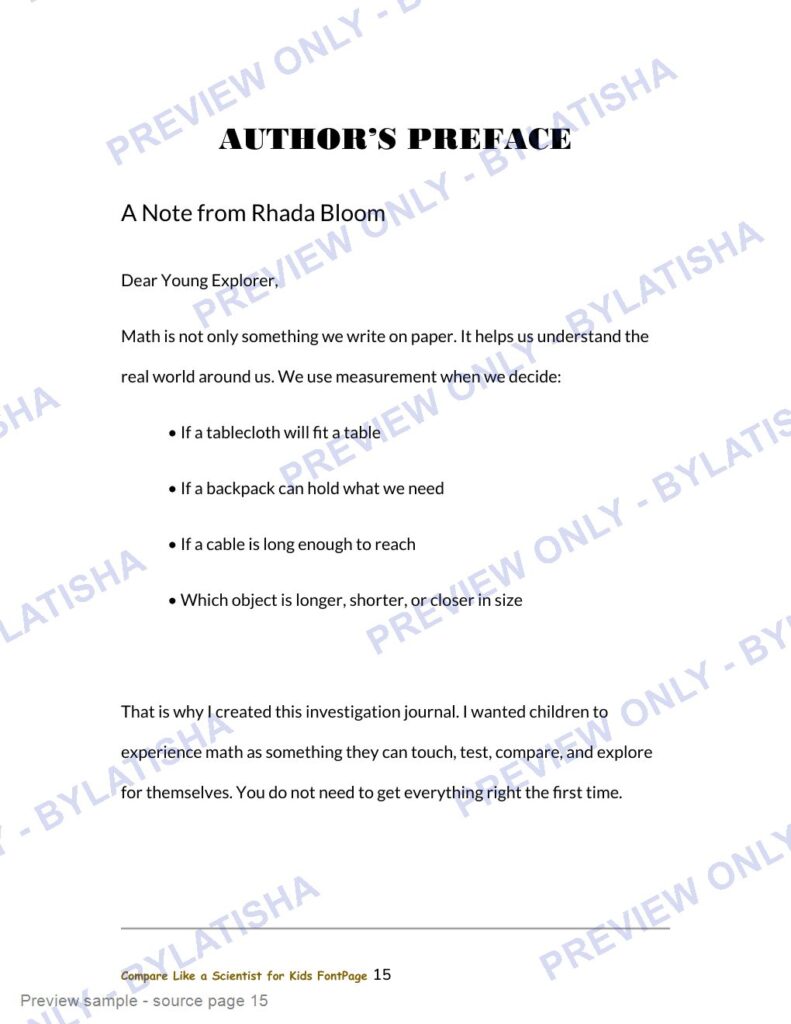
The goal is to help children become careful observers, thoughtful investigators, and more confident users of real-world measurement skills.
If you want your child to practice measurement through real investigation, careful thinking, and simple real-life measurement decisions, this journal was designed to support that journey.
en.math.rhadabloom.com
RELEASE CONTEXT
Release activity around this project
Project Details
View This Project
Available links for this project.