
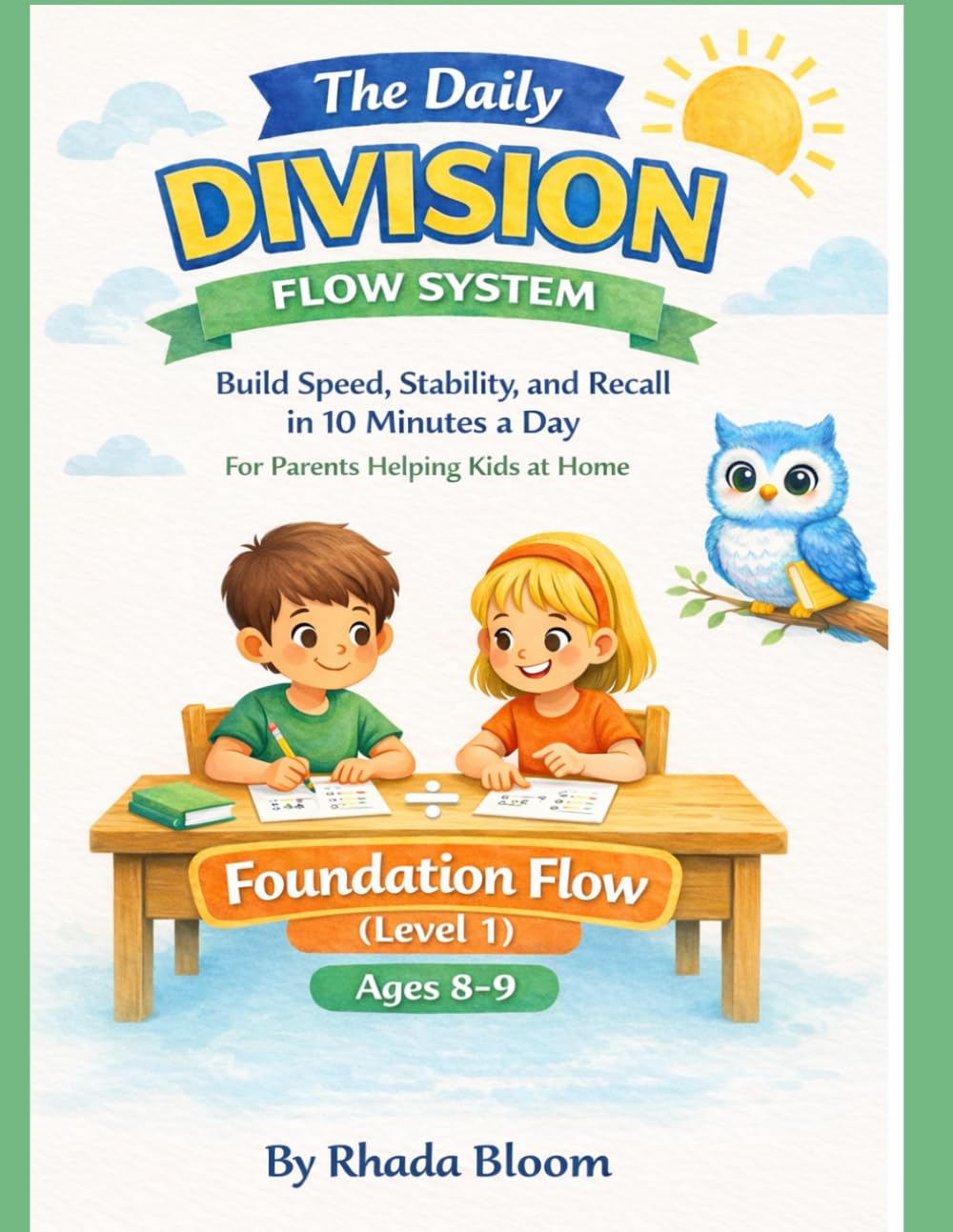
Book Preview
Selected pages from this work. Preview images are watermarked and shown for browsing only.

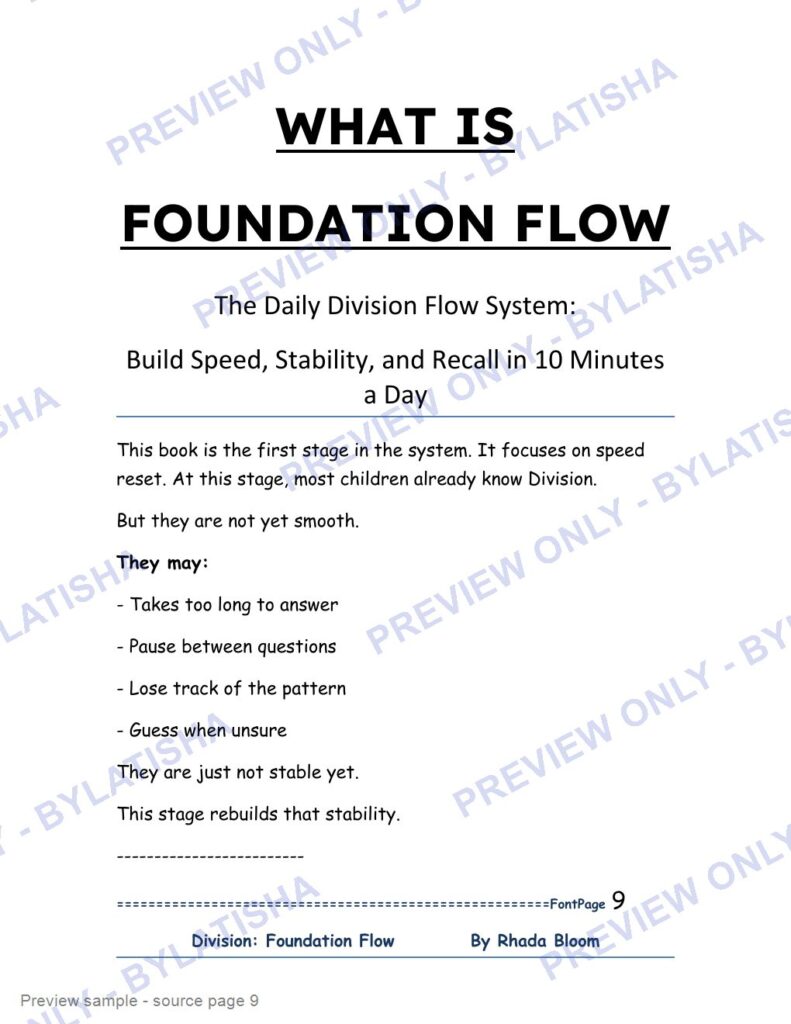
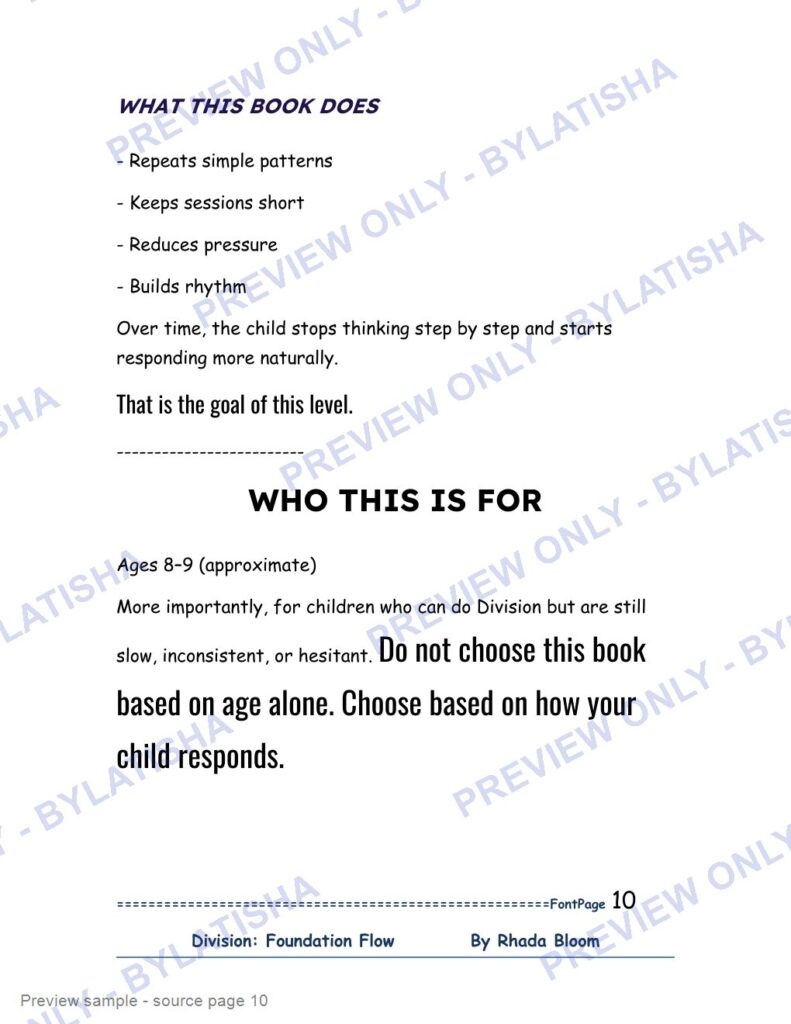
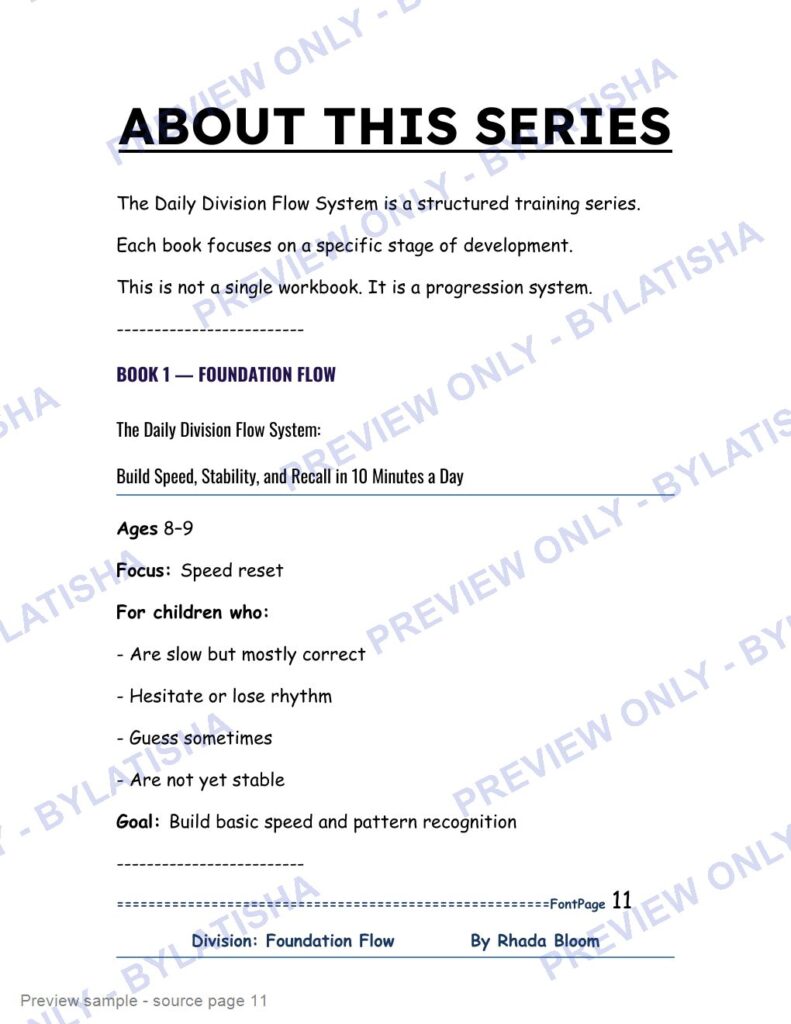
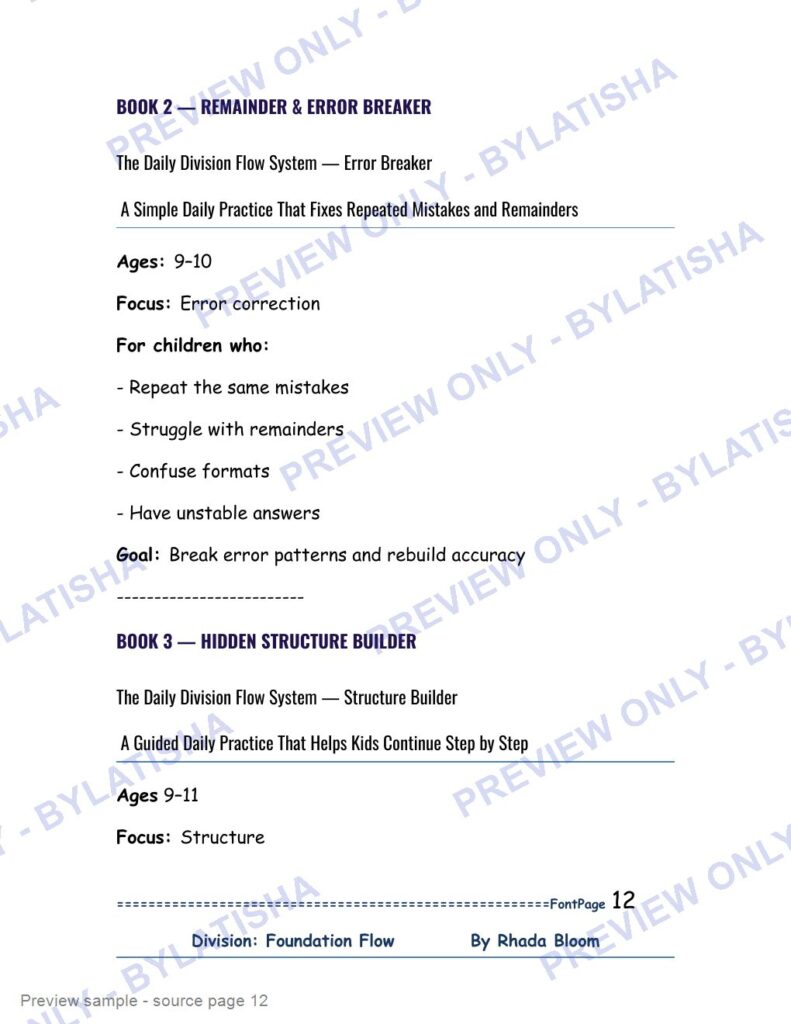
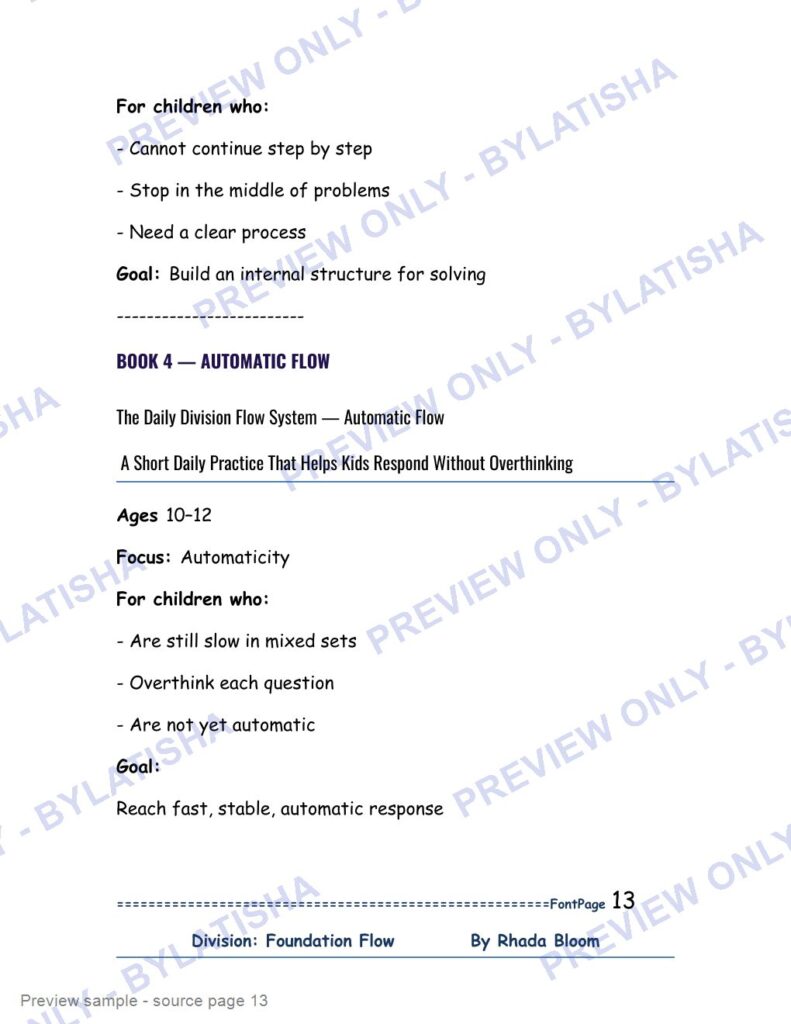
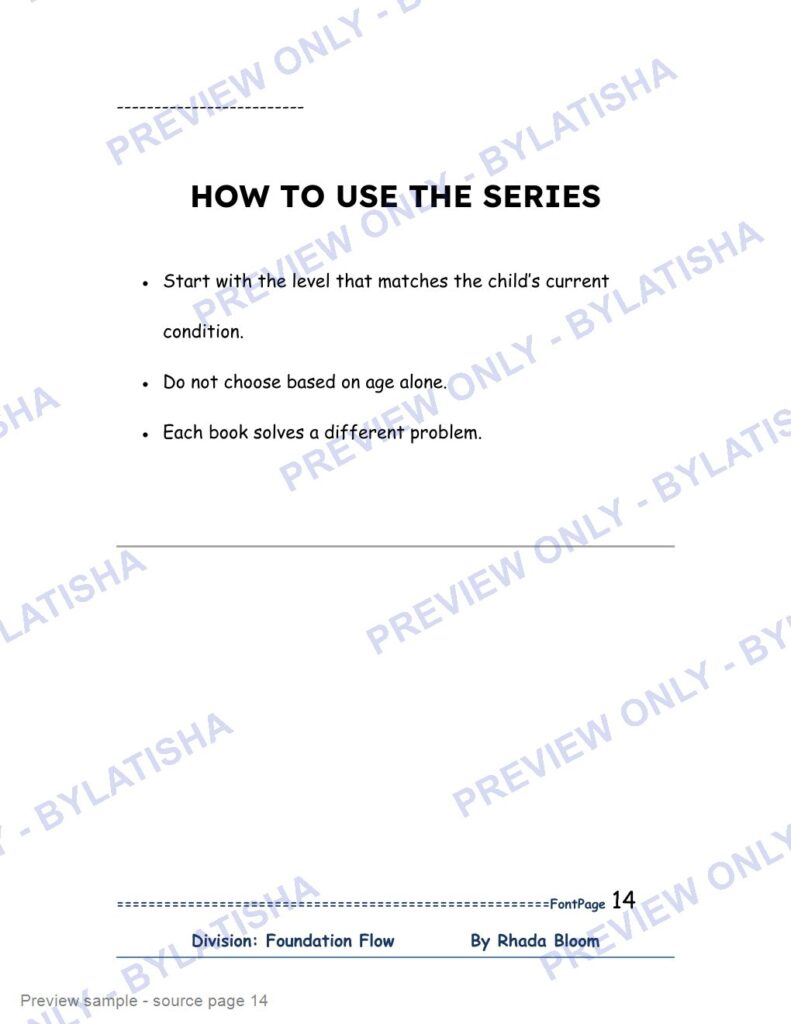
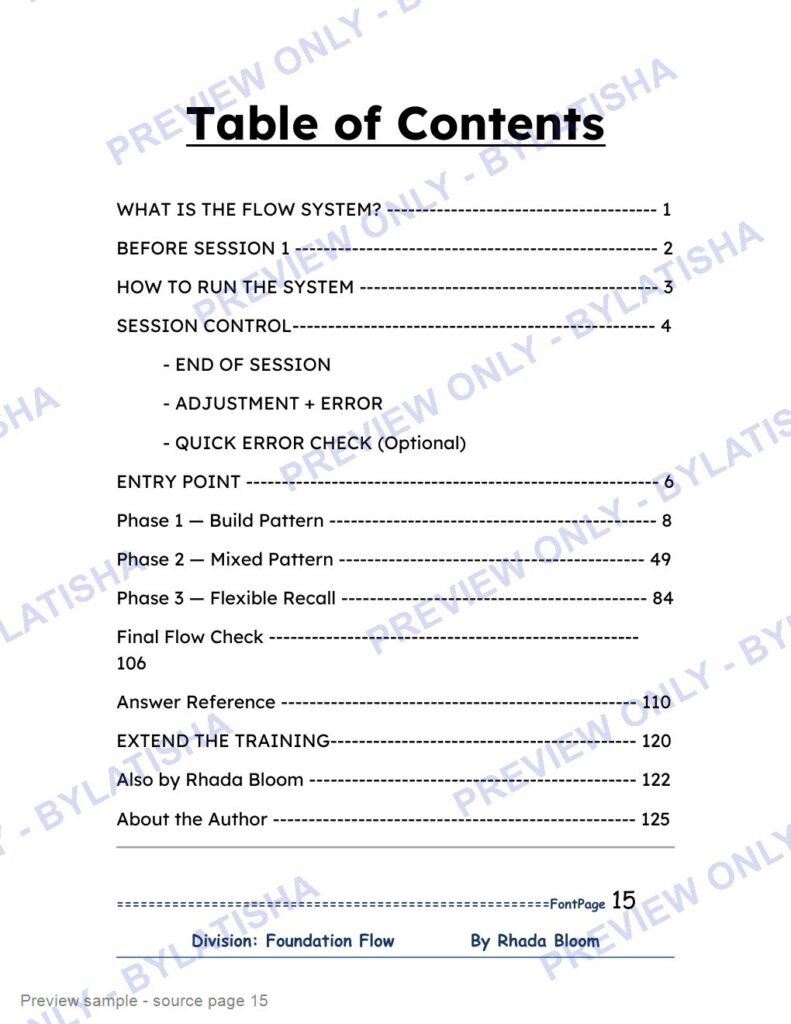
If your child has learned division but still hesitates or slows down, this gives you a clear way to work on that—without adding more pressure.
Short sessions.
Simple structure.
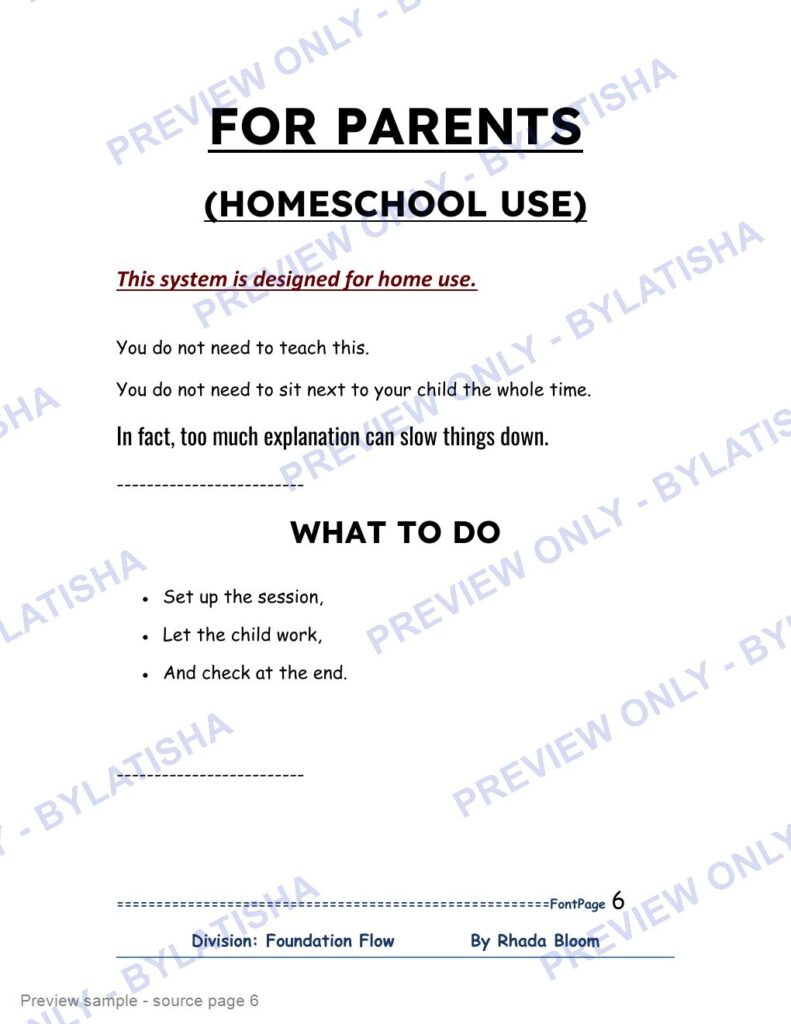
No need to sit and explain every step.
Just a consistent way to practice each day, so answers come more quickly, pauses become shorter, and the child can move through problems without stopping.——————————
But something isn’t stable yet.
They pause between questions.
They take longer than expected on simple problems.
Sometimes they guess when they’re unsure—even though they’ve learned it before.
This isn’t about understanding the concept again.
It’s about not being steady yet—losing rhythm, breaking focus, or restarting too often.
This stage is common, and easy to miss, because the answers are often still correct.————————————————————————
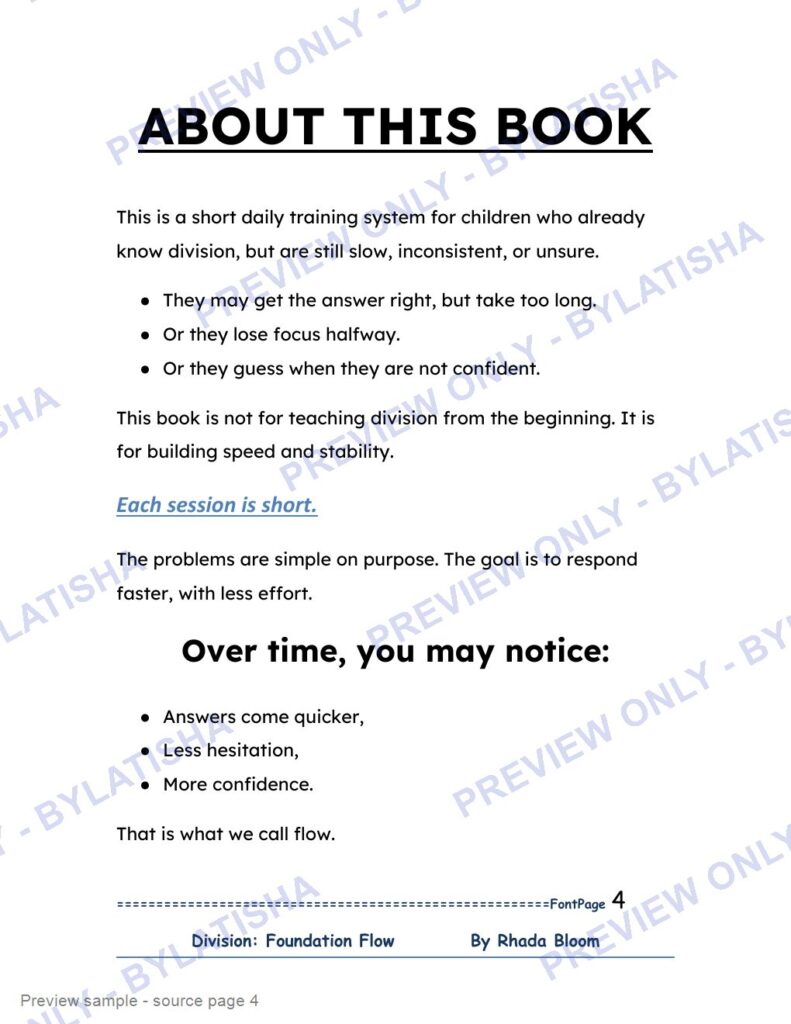
This book is for children (around ages 8–9) who already understand division but are still slow, hesitant, or inconsistent.
- It is for families who want a clear structure without constant instruction.
- It is not for teaching division from the beginning, or for step-by-step explanation during practice.
This book doesn’t reteach division.
It helps the child use what they already know with more consistency, less hesitation, and better continuity.
——————————————–
It works as a short daily training structure focused on how the child responds—not just what they know.
- Each session takes about 10 minutes.
- Problems are intentionally simple.
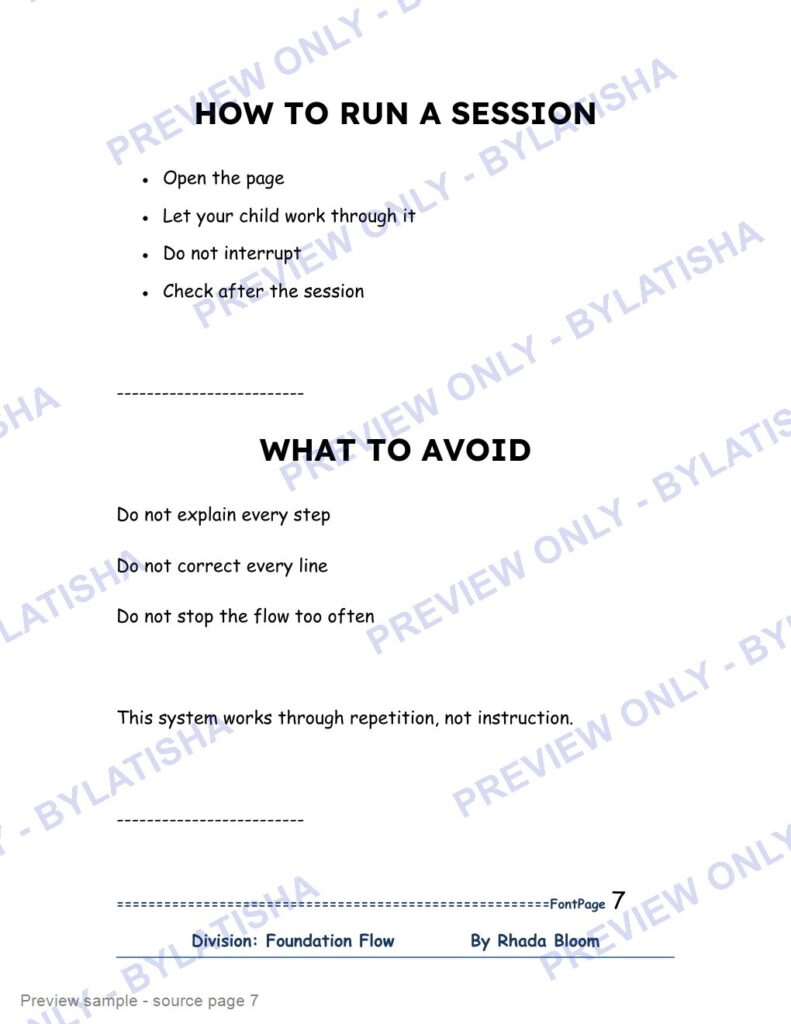
- The goal is to keep moving, not to stop and rethink each step.
Parents set up the session, then step back.
There are no full-page drills, no need to correct every line, and no interruption during the session.
Instead, the system repeats clear patterns in a controlled way, so the child can:
- Move from one question to the next without pausing
- Recognize patterns without rebuilding the method each time
- Stay with the task without losing track halfway
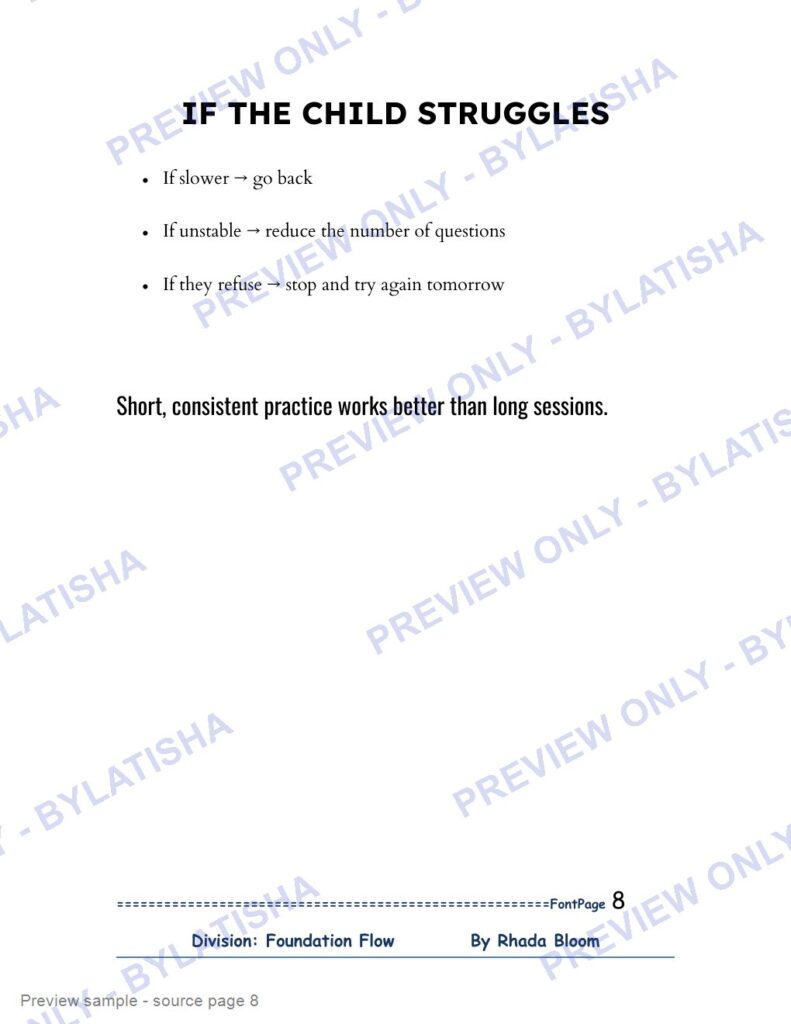
If the rhythm breaks, you adjust.
If it holds, you continue.
Over time, responses become quicker, more stable, and require less effort.
That is the purpose of this level.
rhadabloom.com
RELEASE CONTEXT
Release activity around this project
Project Details
View This Project
Available links for this project.