
Book Preview
Selected pages from this work. Preview images are watermarked and shown for browsing only.
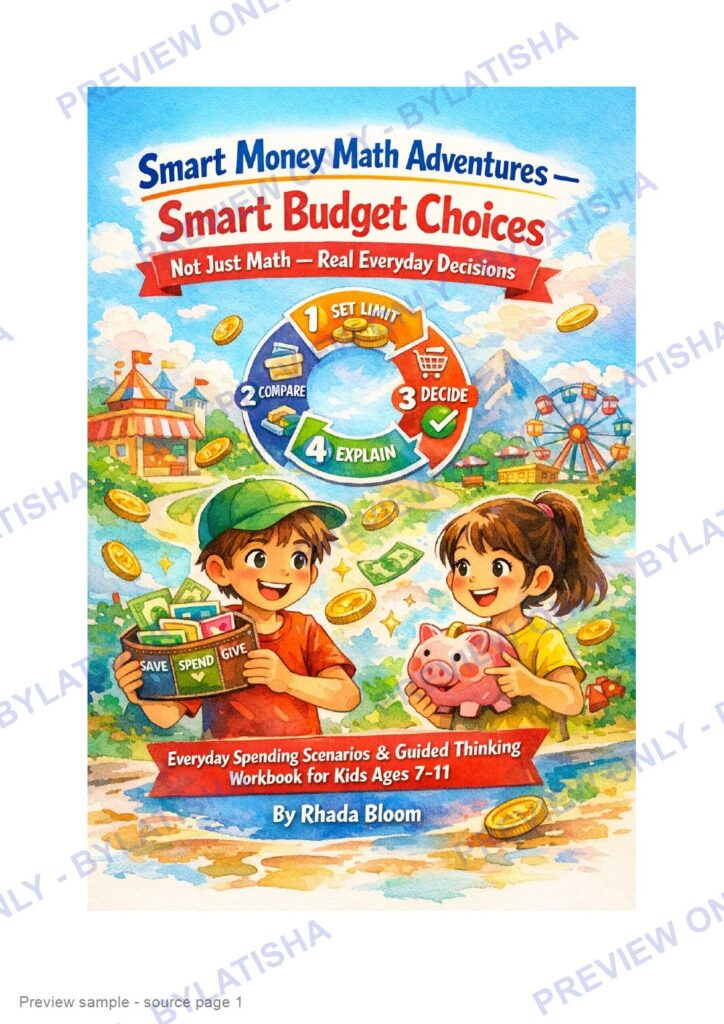
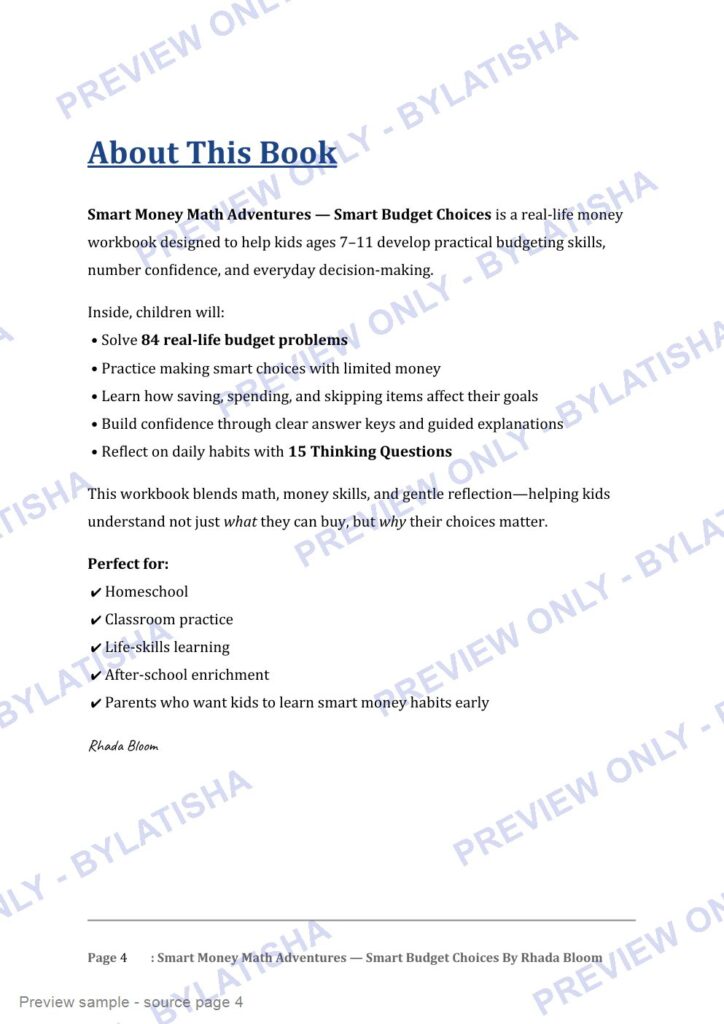
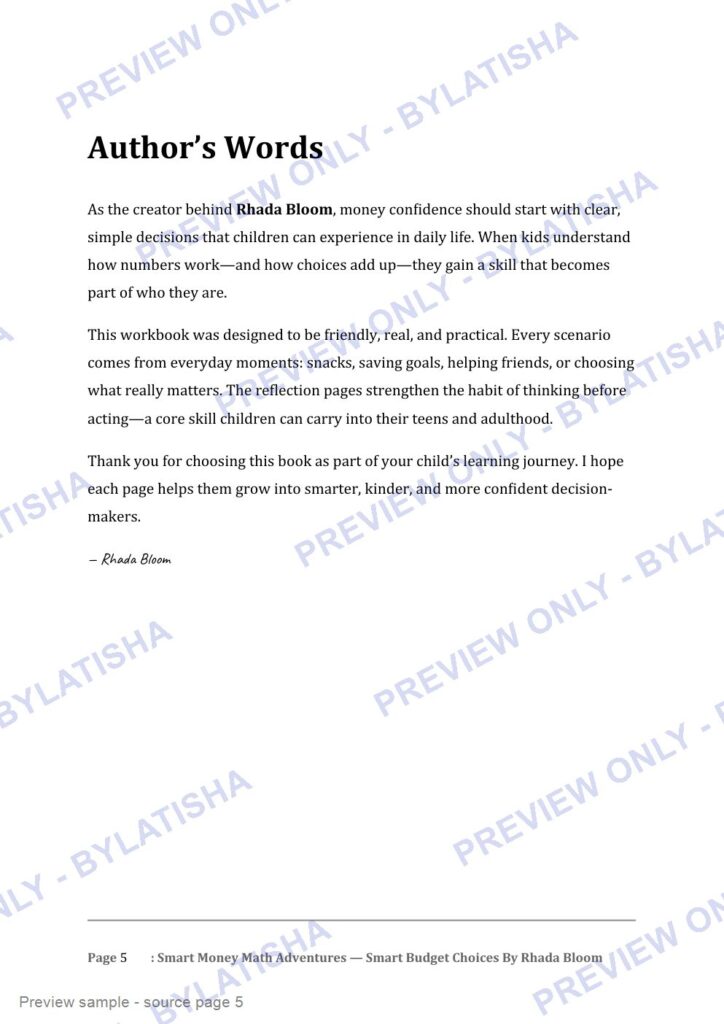
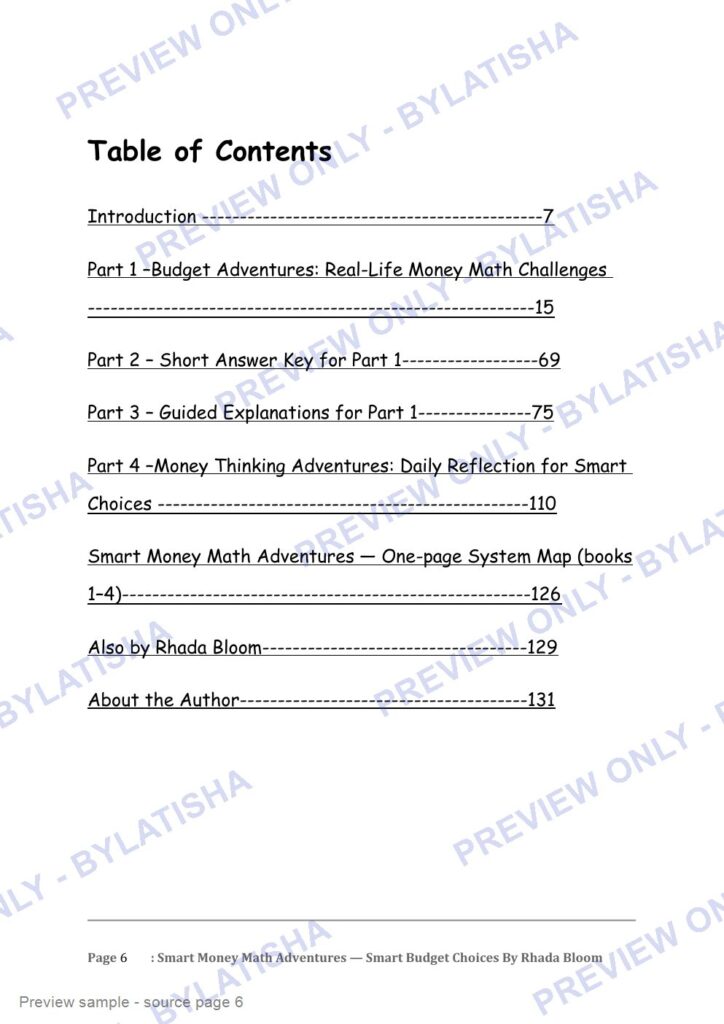
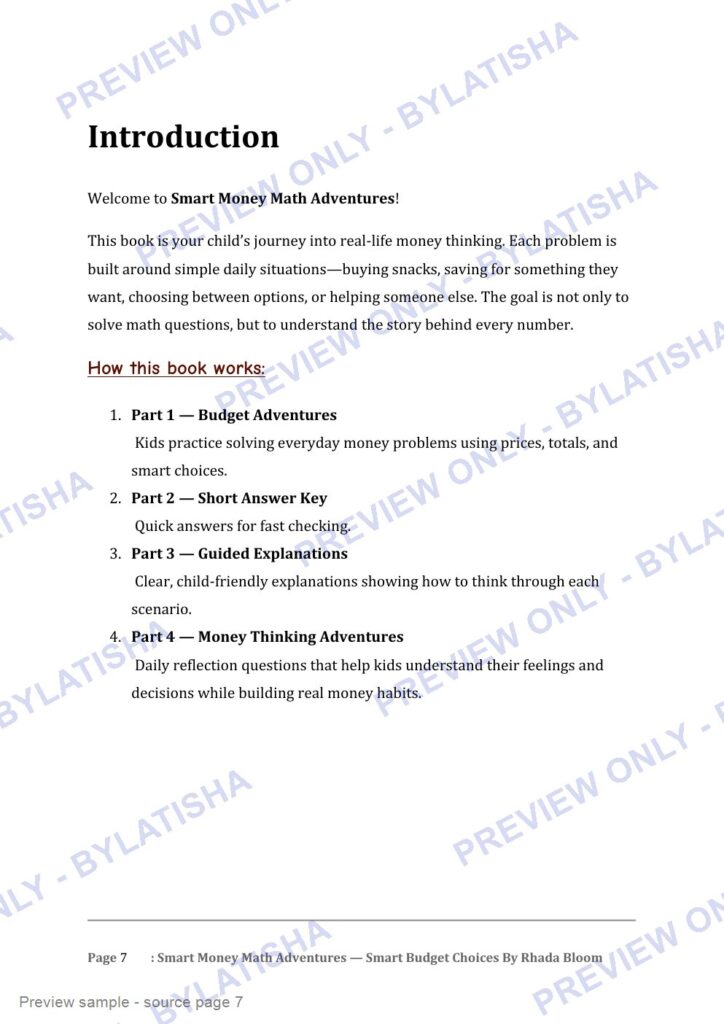
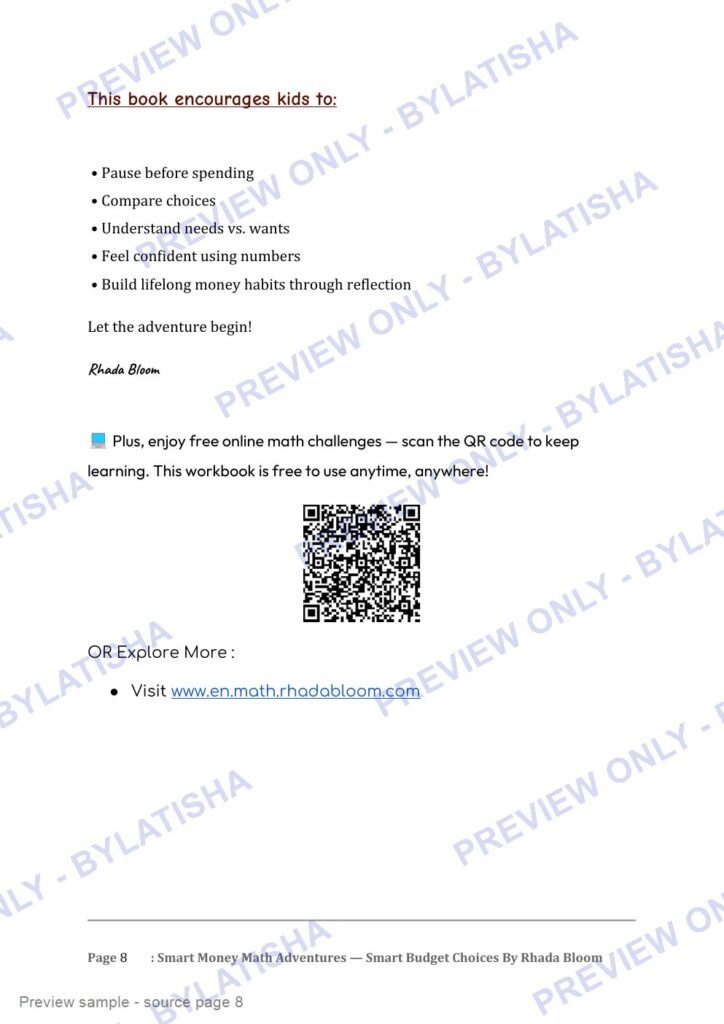
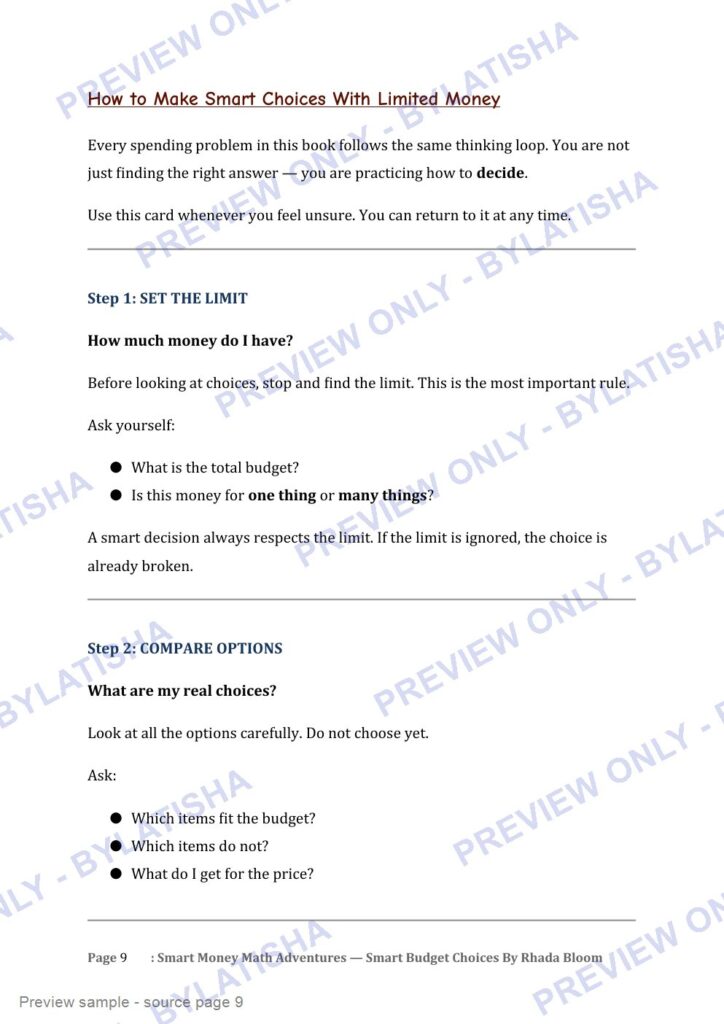
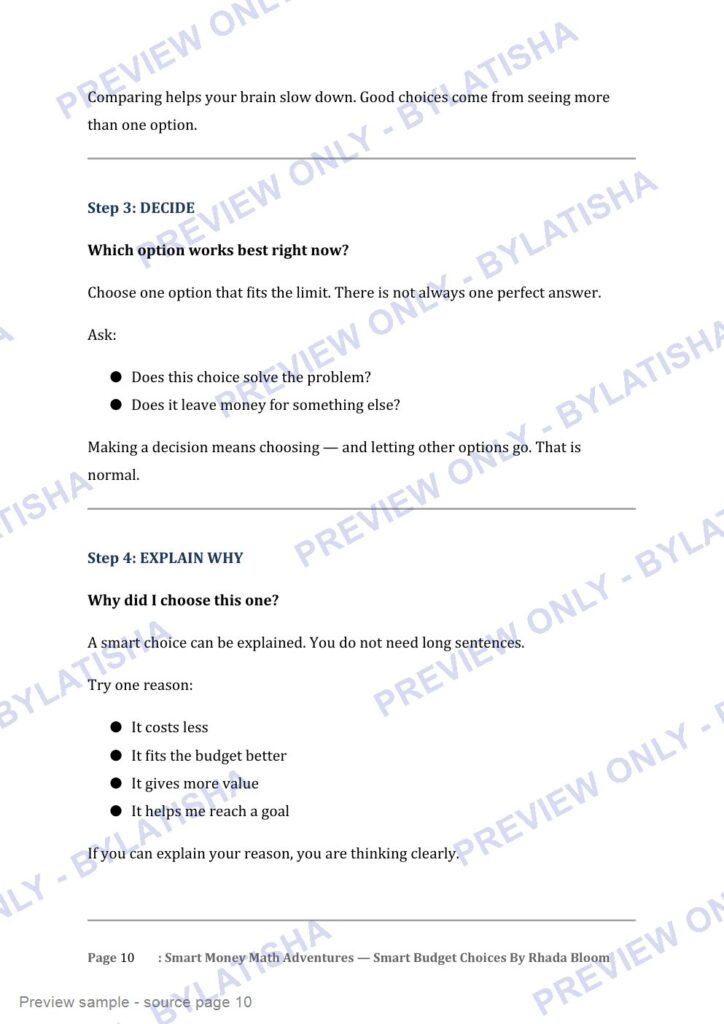
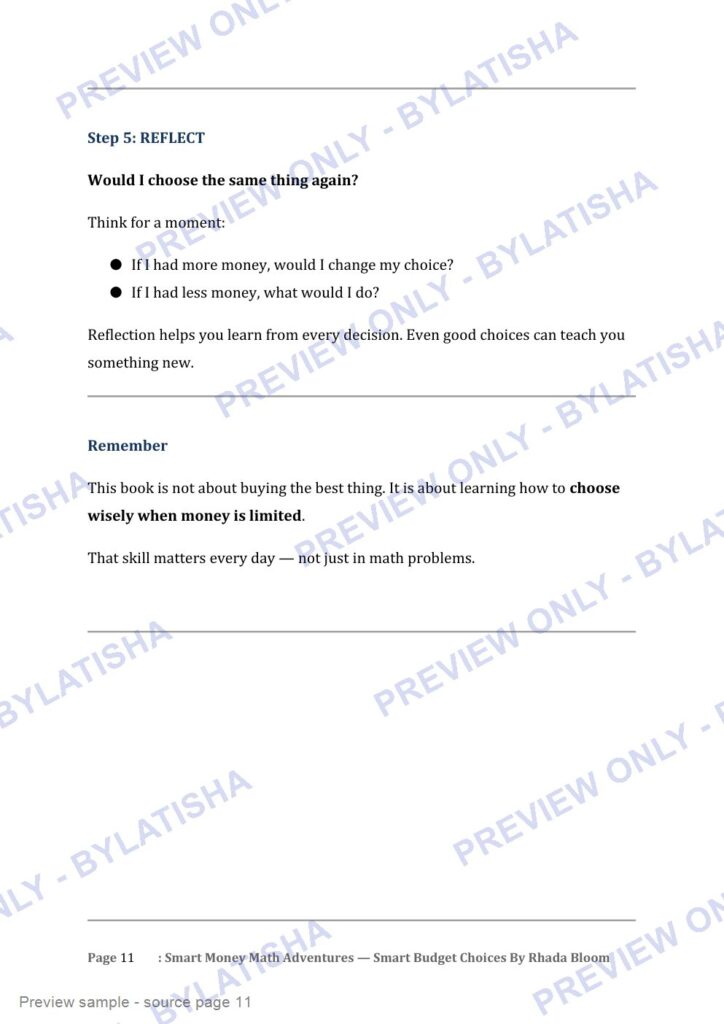
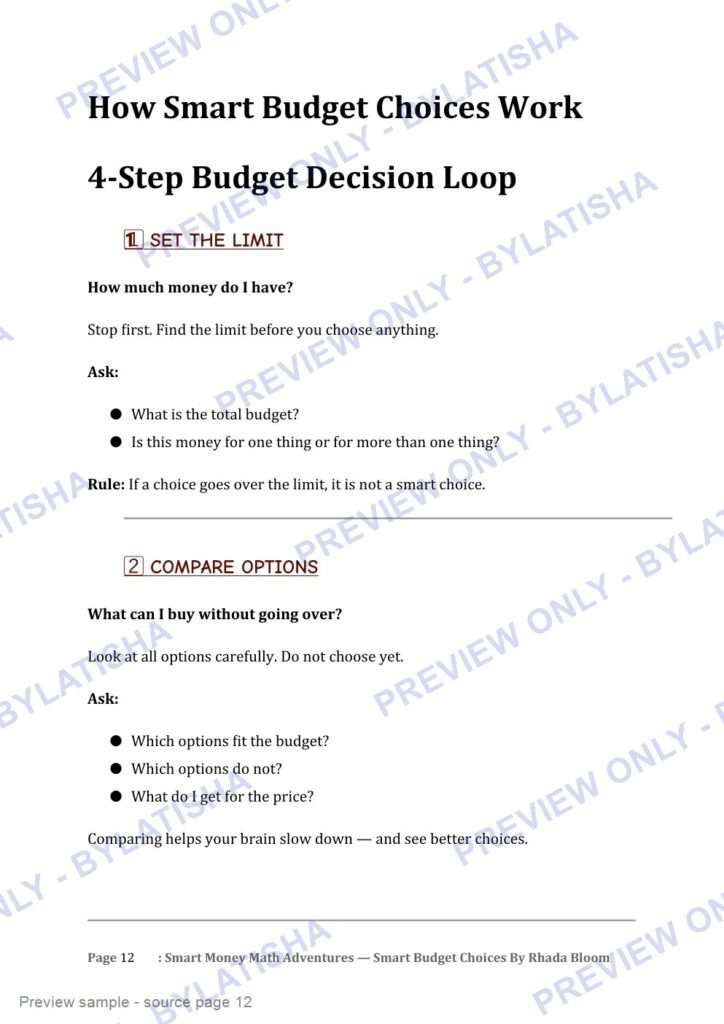
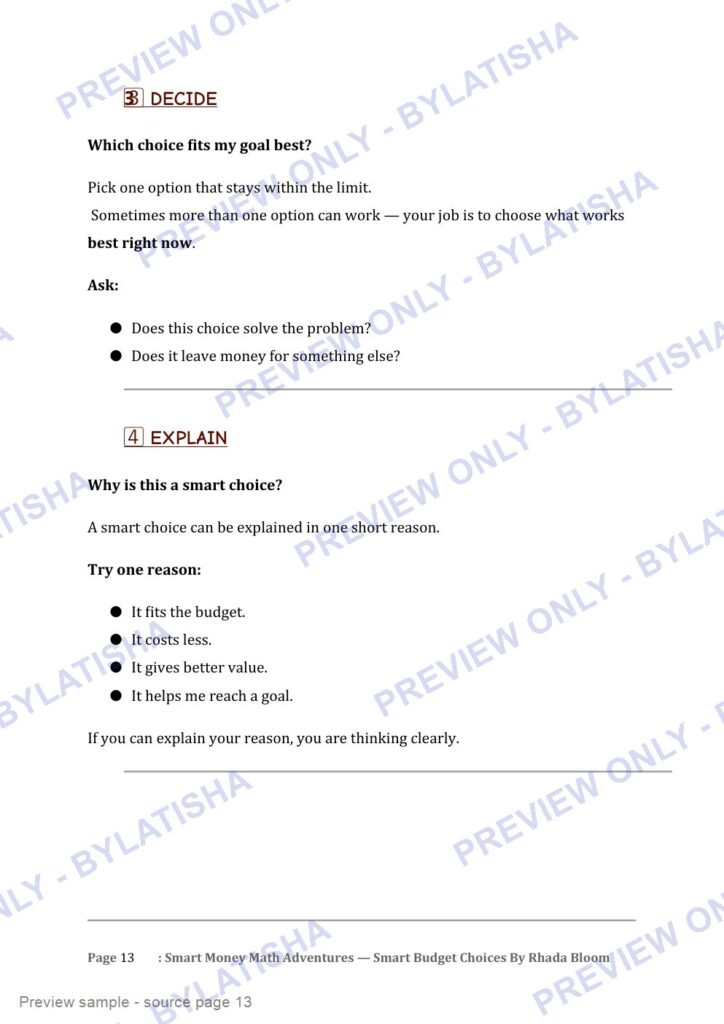
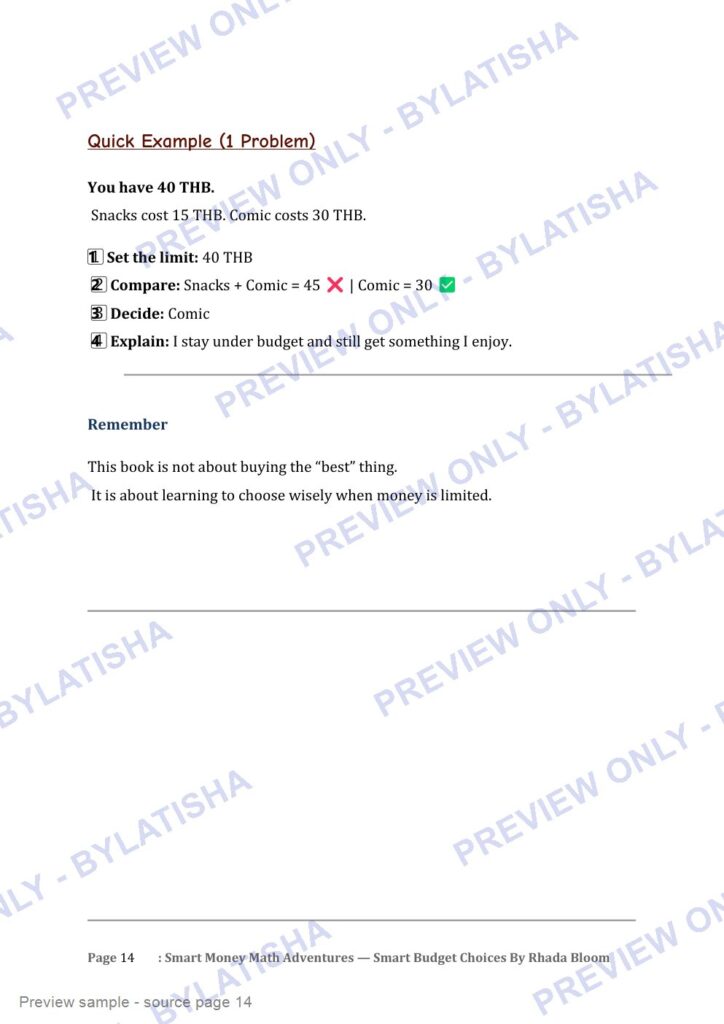
– This workbook teaches children how to make spending decisions—not just how to calculate.
– Through real-life budget limits and guided choices, children practice comparing options, pausing before impulse, and deciding with intention.
– Each page builds the same repeatable thinking habit, so decision-making becomes clearer and more confident over time.
====================================
Many children can do basic math, yet struggle when money choices appear in real life.
They may understand addition and subtraction, but feel unsure when deciding how to spend limited money, compare options, or judge whether something is worth the cost.
In everyday situations—buying snacks, choosing between items, or saving for something later—children often guess, rush, or rely on impulse.
Parents recognize the pattern quickly:
“They know the numbers, but they don’t know how to decide.”
Over time, this can lead to frustration, avoidance, or habits that form without understanding.———————
Most kids’ money books focus on rules, vocabulary, or one-time lessons.
Others rely on stories or tips that explain what children should do, without giving them repeated practice in how to think through a choice. As a result, children may remember concepts like “saving” or “budgeting,” but freeze when faced with real limits. The issue is not effort or intelligence. It is the lack of structured practice in making decisions with constraints.——————-
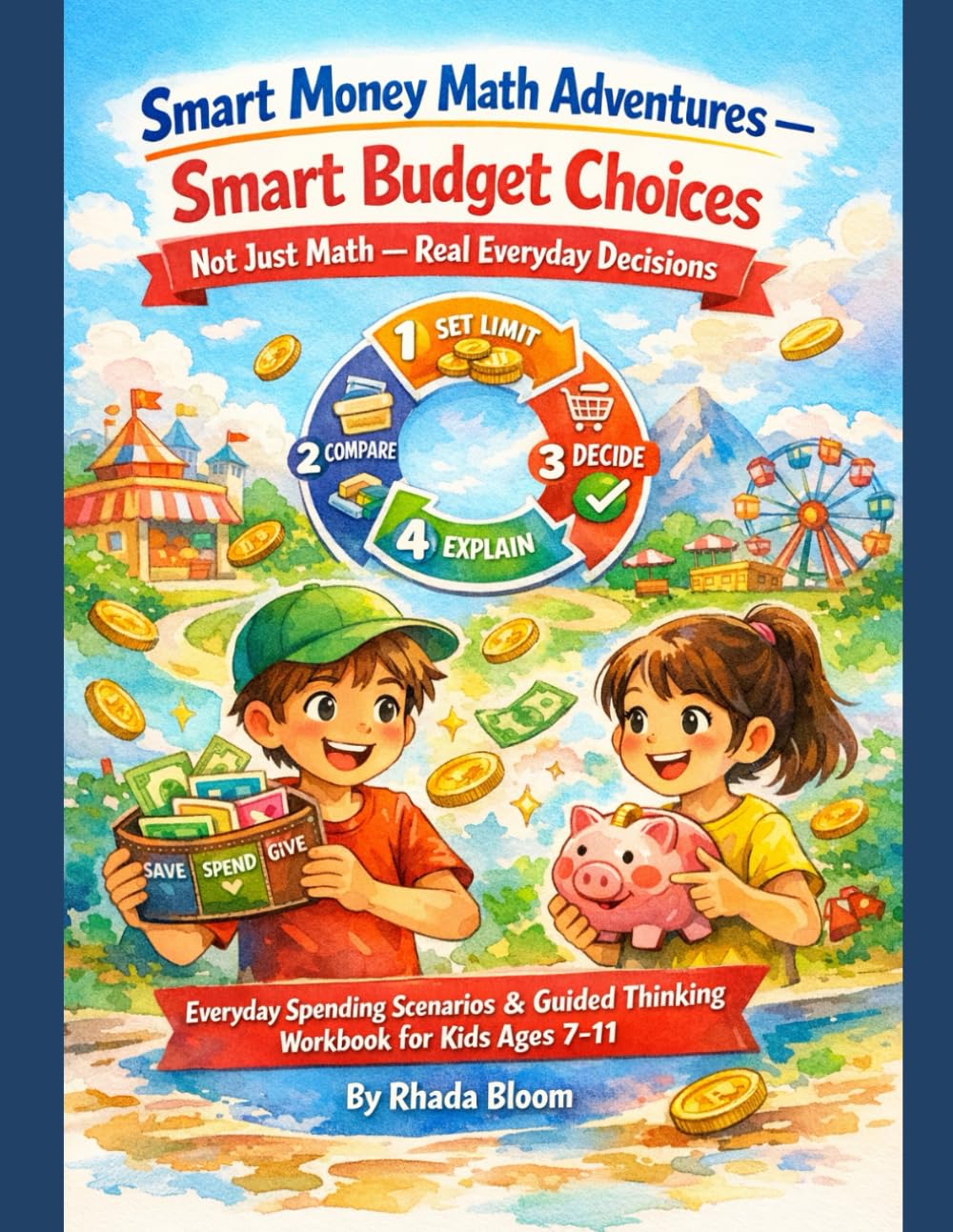
Smart Budget Choices is designed as a guided thinking workbook, not a lesson book.
Instead of teaching rules, it helps children practice the same decision process across many real-life scenarios:
- Setting a clear budget
- Comparing realistic options
- Making choices within limits
- Explaining why a decision makes sense
- Reflecting on outcomes calmly
Each scenario follows the same thinking structure, so children build a repeatable decision habit—not isolated answers.
The pages are intentionally text-light and visually calm, allowing children to focus on thinking rather than instructions.
The focus is clarity, not speed, and understanding, not perfection.
With regular practice, many children begin to pause before spending, explain their choices more clearly, and feel more comfortable deciding within limits.——-
This book is for:
- Children ages 7–11 learning to manage small amounts of money
- Parents who want practical decision-making practice, not lectures
- Homeschoolers and educators seeking structured, repeatable routines
- Children who benefit from calm, guided thinking
This book is not for:
- Fast-paced drills or competitive math practice
- Entertainment-focused or game-based workbooks
- Advanced finance or adult budgeting instruction
There is no rush and no single “right” answer—the goal is thoughtful decision-making.———-
If you want your child to build confidence in everyday money choices—by learning how to think, compare, and decide—this workbook offers a clear place to begin.
Open the book.
Work through real situations.
Practice choosing with intention, one decision at a time.
For children who know the math but struggle to decide, this is where understanding begins.
RELEASE CONTEXT
Release activity around this project
Project Details
View This Project
Available links for this project.